Fae Stones, a Crystal Beginner Guide
Stones that attract faeries . . . kind of.
These are some of the stones and crystals that I have found attract faeries. Not all faeries are the same. Some will like only one particular kind of crystal, some won’t like it at all. I tend to listen to my fae friends when I go looking for crystals and come back with things that they really like.
I live in the United States. Faery lore tends to come to us from the British Isles and Europe (Germany, France, and Cornwall, to name a few places). This is a pretty good base, however, the faeries that I work with are a little different. I’m not sure if this is because of my location or the type of fae that are drawn to me (which are generally pixies and sylphs). I work hard to develop my personal relationships with my fae friends and I try to listen to them when they tell me what they like.
Bismuth?! But faeries don’t like metal…
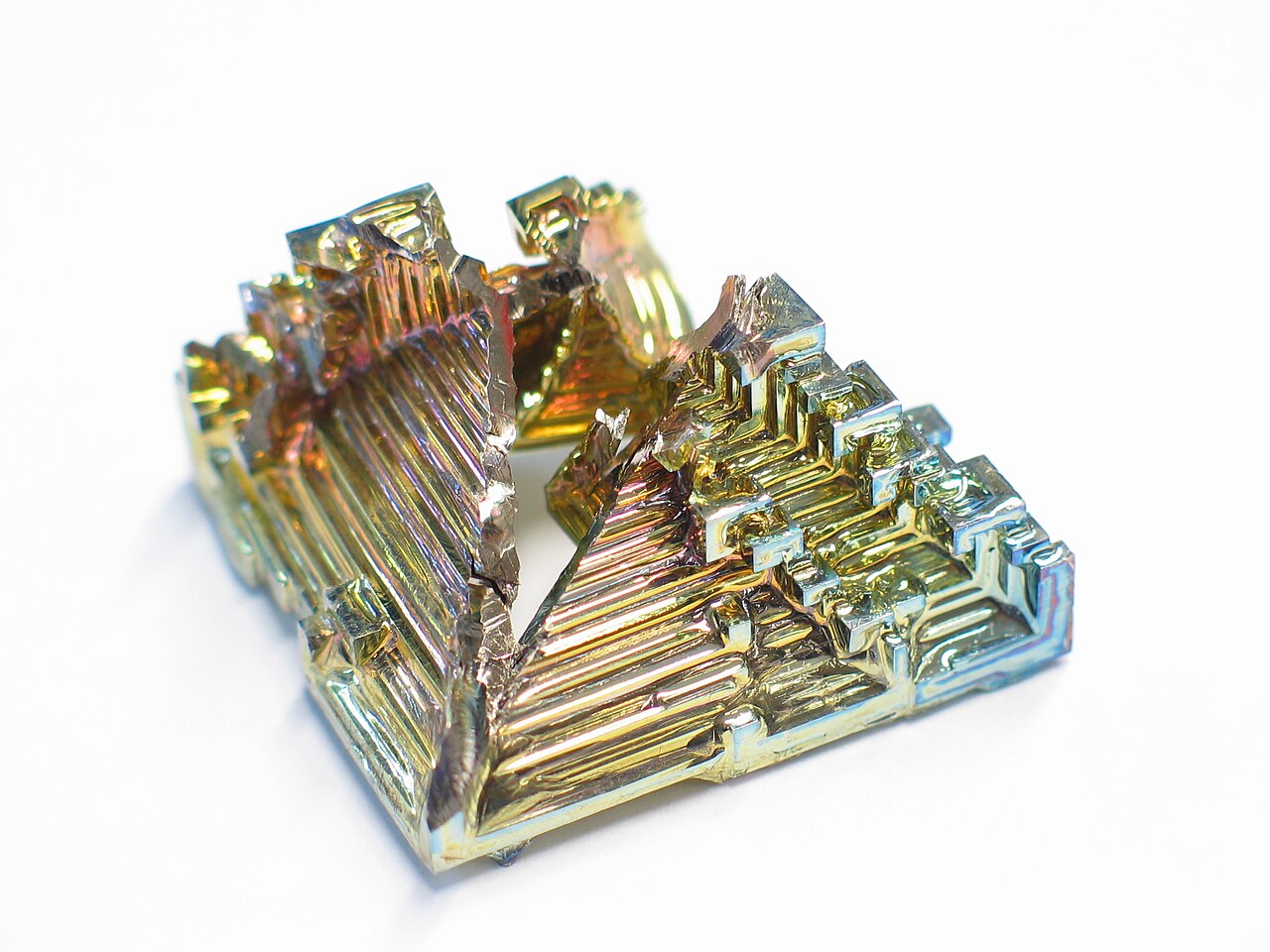
I know a lot of people who say, “Faeries don’t like metal!” though this is kind of untrue. Faeries, as a general rule, don’t tend to like iron. It is cold enough to burn them, though they won’t say if this is because humans have heated and cooled the metal or if the pure metal chunks themselves harm them (though I’m pretty sure it’s about the former rather than the latter, but that just depends on what kind of fae). Some can be persuaded that steel isn’t that bad, especially if it’s designed into an elegant shape, though those are some pretty rare fae. Generally, they like silver and gold, the higher the carats, the better. Some like copper, though those are usually fire faeries, or fae who like electricity.
My fae friends, one day, discovered bismuth. Well, I was visiting my local Tropical Trends and saw a necklace charm made from bismuth. The iridescent, geometric patterns really caught my eye. I picked it up and exclaimed, “Thats’ really neat!” I didn’t buy the charm though, as I didn’t particularly want it. But for an entire week, all I could think about was bismuth. I looked up pictures of it. This kind of bismuth is man-made, but my fae friends didn’t care, and drove my obsession onward.
Eventually, I texted a friend who is a wonderful new-agey resource and she pointed me toward a local rock shop where I could find these super cool metal formations. My fae friends went crazy. “Let’s buy them all!” I sang, as I touched every single piece. They laughed with me, and we settled on piece that reminded me of the Emerald City… it looks like a tower. I set it up on my altar at home, where it happily gets regular cuddles from one or two of my fae friends.
Then I went to a different local rock shop, where I found a bowl made out of bismuth. Priced at close to $50 and one of a kind, my fae friends started yelling for joy. It was all I could do to stop myself from blowing my entire budget and buying it right there. If it’s meant for me, it will still be there the next time I go.
It’s man-made, so faeries won’t like it.
Another stone that I found out is man-made is goldstone. There are three different colors that I know of; gold, blue, and green. According to Wikipedia, it is a type of glittering glass with copper flecks suspended in it, not a naturally occurring crystal like many of these other stones. Does that mean it’s not really a crystal? Well poop, I guess that means faeries don’t like it! Some of them prefer different stones, but again, I have a few friends who just love the glittery sparkle of it. I tried to take it off my altar with a resounding “Noooooo!”, so it’s there on my altar, along with the rest of these stones.
Don’t worry too much about whether or not a stone is man-made. Your faeries will tell you what it is that they want, or they’ll work out a way to connect you with the stones.
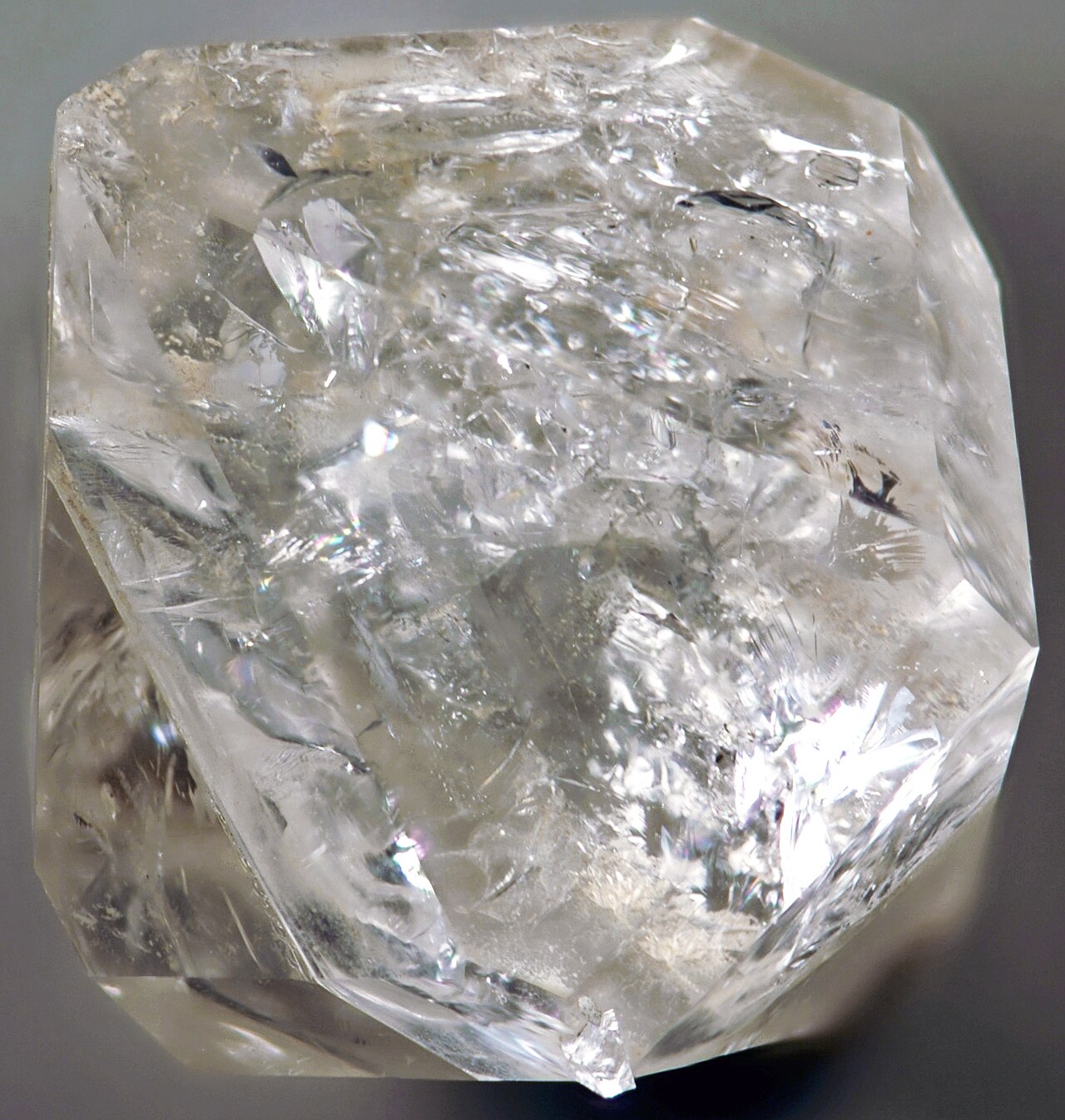
Universal fae stones are herkimer diamonds and staurolite.
Two kinds of crystal that I have found that seem to be universal among faeries is herkimer diamonds and staurolite. Herkimer diamonds are double-terminated quartz points found only in one specific mine. From all I have read, they are naturally-occurring with their terminated points. I have a pair (well, my faerie friends are currently borrowing one) that I found in a shop a long time ago, back when I was first interested in working with faeries. One is in a small bag under my pillow, because herkimer diamonds also aid in giving dreams. Ever since I put it there, I have had some really vivid dreams.
A friend found me some pink herkimer diamonds a while back, and I found my dark herkimer diamond at a local rock shop. They probably had 100 of these stones there, from large to tiny, and my fae friends were screaming the entire time that I looked at each one. They really, really love these crystals. In fact, I spent way too much on herkimer diamonds that shopping trip. But my fae friends are happy, and I really love the energy that these stones give off.
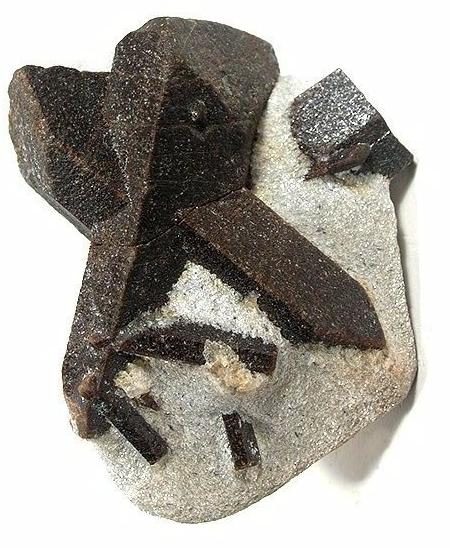
Staurolite is also known as “faerie crosses”. According to legend, when faeries heard that Christ had been crucified, their tears fell to the earth and turned into these naturally occurring crosses. I have some encased in mica, which I had been meaning to clean off. But I’m not sure on the proper way to clean these kinds of stones, and I broke my poor faery cross. As I was lamenting it, I saw a little blue sparkle, like a tiny flash of light, hovering nearby; it was one of my oldest faery friends, comforting me.
Do you really need stones to work with faeries?
Other kinds of crystal and stone I have heard of that the fae really appreciate are angelite, celestite, chiasolite, and aura quartz. I have some angelite and celestite that my fae friends like okay, but it’s not their favorite stone ever. I have a few that really like tiger’s eye, some like leopard jasper, some like my aura quartz. It just depends on the individual faery.
If you don’t have any of these kinds of crystals, that’s totally all right! You don’t really need crystals, stones, or magical tools to really work with faeries. All you need is your own inherent power. Magic doesn’t come from anywhere outside of us; the magic is inside you. However, if you want to try to find a stone to get you started, I suggest plain clear quartz. This is a great stone, and one that I actually don’t have a lot of. The piece in the picture has a rainbow inside of it, something that I did not notice until after I had purchased it. I went to my local rock shop, and this was the piece that my fae friends directed me toward.
You can always go shopping and ask your faeries for intuition and help choosing which crystals you should get. However, faeries don’t have a concept of money. At the very least, they don’t really understand money, and you might end up spending more than you have budgeted.
Faeries are just like people. Well, okay, no, they’re not, please don’t compare us to people, they say. I don’t mean like that, friends. I mean that each one has a different, unique personality. Not even each group of fae, even though those too, tend to have different personality quirks. Each individual fae that you work with will be able to express its own likes and dislikes to you if you listen. You could end up with a fae who doesn’t particularly like bismuth but dude, he sure seems to like sodalite. Developing a relationship with faeries is exactly that; developing a relationship. It’s as individual as people and faeries themselves. So do your research, yes, that’s a good baseline. But you also need to listen to what your fae friends whisper.
Your turn!
Do you feel an affinity to a certain stone? Tell us about it in the comments below!
Looking for more? Learn about the four families of elemental faeries, or read the 6 rules for working with the fae safely.