Faery Rings: The Folklore, the Dangers, and the Fungus Behind Them
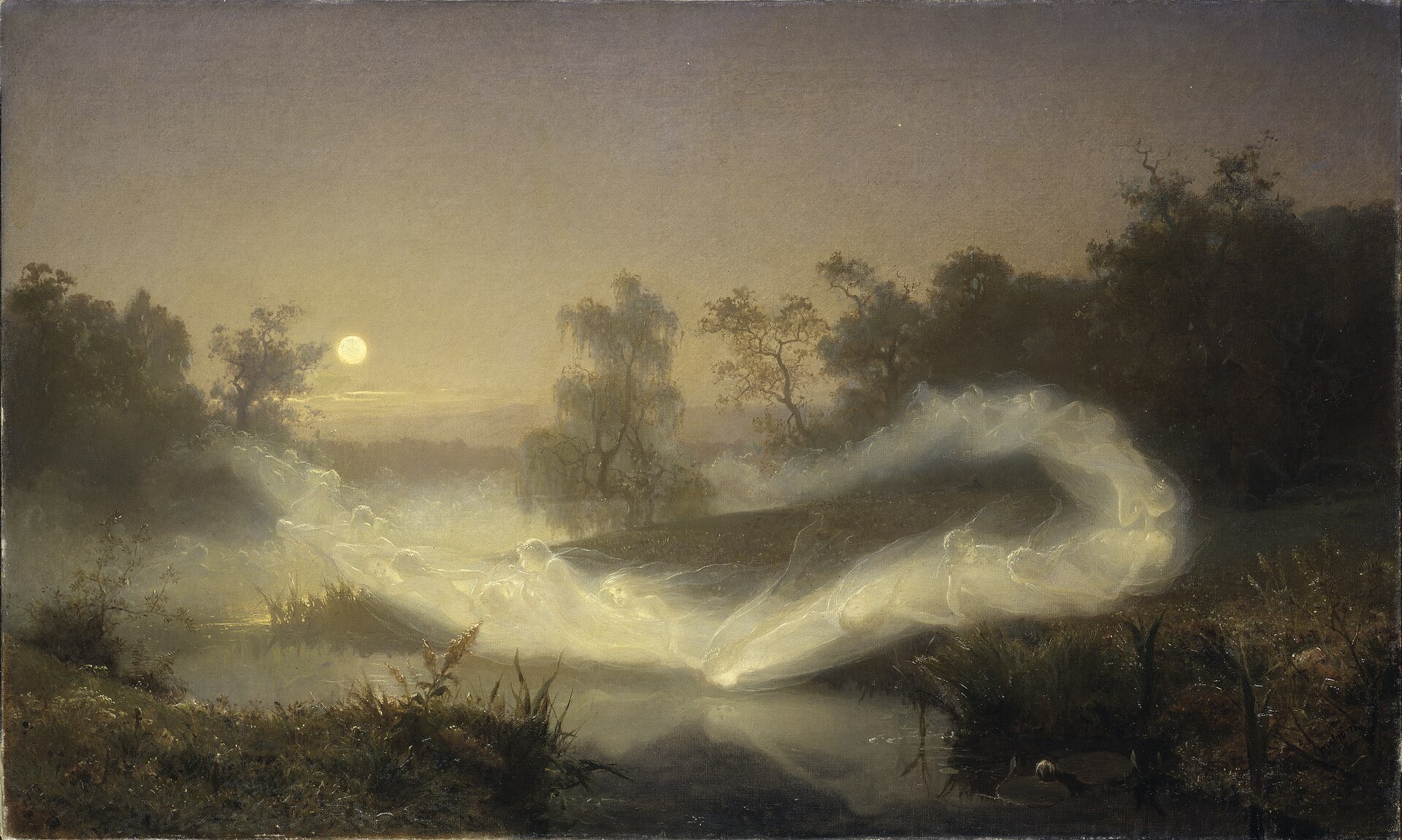
Walk across an old pasture in late summer and you may find one: a circle of mushrooms, or a band of grass greener than the field around it, so neat it looks drawn with a compass. For most of European history people had a simple explanation. The fae had been dancing there.
This is a guide to what people believed about faery rings, why they warned you to keep your feet out of them, and what is actually going on under the grass.
What a faery ring is
A faery ring is a circle or arc of mushrooms, or a ring of dead or unusually lush grass, that shows up in lawns, meadows and woodland. Some are small enough to step over; others run more than ten metres across. They go by plenty of names, including fairy circles, elf rings and pixie rings. A twelfth-century English plant name, elferingewort, shows how old the idea is.
Who was dancing there?
Nearly every corner of Europe had its own answer, and fairies were only one of them:
- In England and Wales, the ring marked where the fair folk had danced the night before. In Welsh it is cylch y Tylwyth Teg, the circle of the Fair Family.
- In Scandinavia it was elves, and the rings were called elfdans, elf-dance.
- In Germany they were Hexenringe, witches’ rings, trodden flat on Walpurgis Night. The French ronds de sorcières means the same thing.
- The Dutch said the Devil set his milk churn down there, and in the Tyrol people blamed the fiery tails of flying dragons.
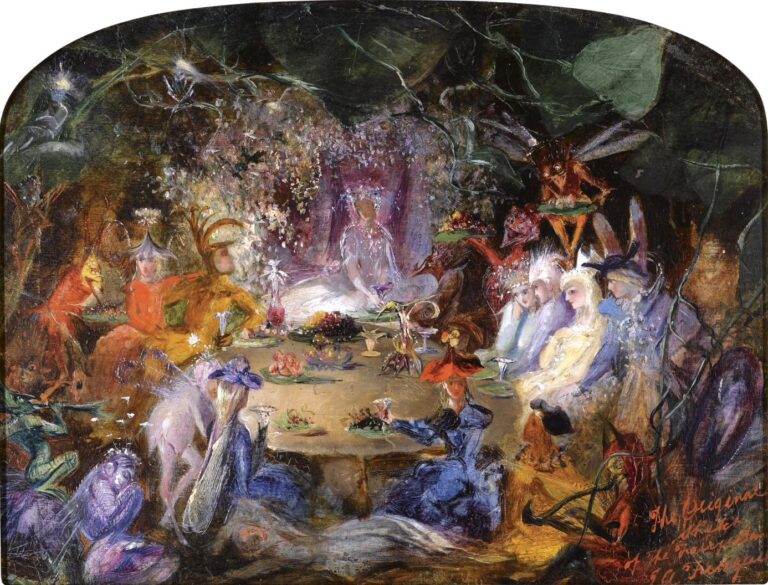
One account from Balquhidder in Scotland offered a homelier idea: the fairies used the mushrooms as their dinner tables.
Why you were told to stay out
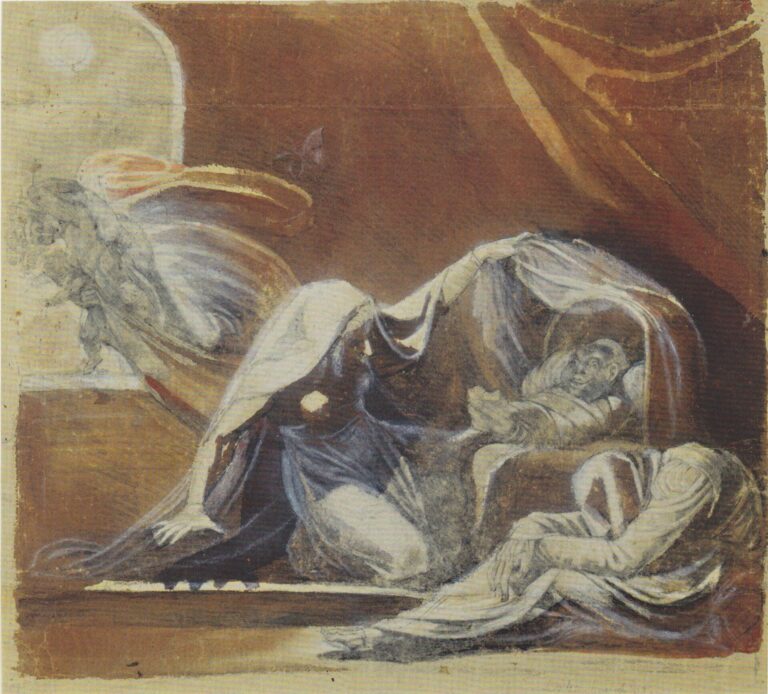
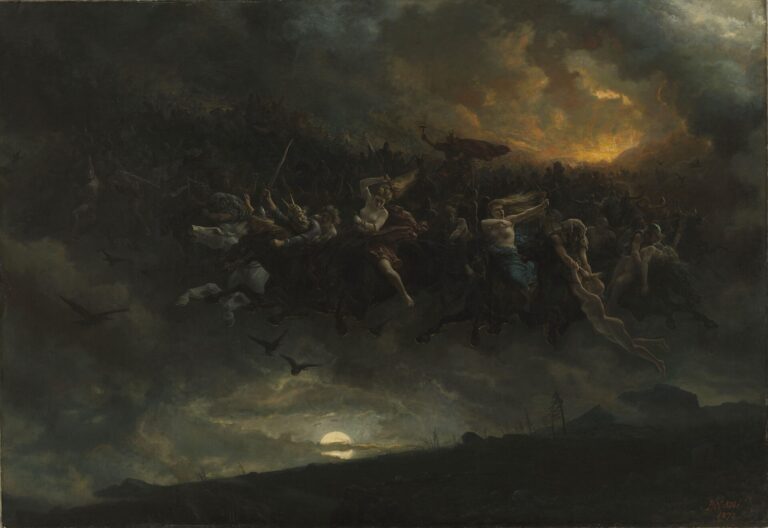
The warnings are remarkably consistent. Step into a faery ring, especially on May Eve or Halloween, and you might be pulled into the dance. The dancers could be invisible to anyone outside, and they danced until exhaustion, madness or death.
Time behaves badly inside the ring, too. A dance that felt like a few minutes could last a year, or many. Some tales end with the rescued dancer crumbling to dust at the first taste of ordinary food, much as Oisín aged in an instant when he touched Irish soil after his years in Tír na nÓg.
If someone was caught, the stories offer ways out. You could pull them free (one version has four helpers holding a rope), touch them with iron, or strike into the ring with a rowan stick. Often you had to wait a year and a day and snatch them back as the dance came round again. In Wales people scattered wild thyme and marjoram into the ring. Another custom says you could run around a ring nine times and hear the fairies underground, but a tenth lap was asking for trouble.
Even damaging a ring was unlucky. Plough it under and it would only grow back, and the bad luck stayed with you.
Shakespeare knew them too
By Shakespeare’s day the idea was common enough to drop into a play without explanation. In A Midsummer Night’s Dream, a fairy says she serves the queen “to dew her orbs upon the green,” and Titania talks of dancing “our ringlets to the whistling wind.” In The Tempest, Prospero calls on the elves who make “the green sour ringlets” that the sheep won’t eat, and whose pastime is “to make midnight mushrooms.”
What is really happening underground
The ring is the visible edge of a fungus. Under the soil, a web of fungal threads called the mycelium grows outward from its starting point in every direction, using up the nutrients as it goes. The middle runs out of food and dies back, so only the advancing edge stays alive, and that edge is where the mushrooms come up.
The same edge explains the grass. Where the fungus breaks down organic matter it can release nitrogen and the grass grows dark and lush; where it crowds the roots, the grass browns off. About sixty species of fungi can form rings. The best known is the fairy ring champignon, Marasmius oreades, a small tan mushroom of lawns and pastures. (Please don’t eat any wild mushroom unless an expert has identified it in hand; several poisonous species grow in rings too.)
Because the edge only creeps outward a little each year, the biggest rings are very old. One near Belfort in north-eastern France is around 600 metres across and thought to be more than 700 years old. Some on England’s South Downs appear to be several centuries old.
So, should you step in?
I won’t tell you the folklore is true, and I won’t tell you it isn’t. I’ll only say that I walk around them. It costs nothing to be polite, and a circle that has been quietly growing in the same field since before your great-grandparents were born deserves a little respect.
If you want to know how the fae expect to be treated, start with our rules for interacting with the fae. If you’re wondering what kind of faery would be dancing in a meadow ring, our guide to elemental faeries is a good next read.
Sources and further reading
- Fairy ring, Wikipedia (folklore and mycology, with references)
- William Shakespeare, A Midsummer Night’s Dream, Act II, Scene 1, and The Tempest, Act V, Scene 1