The Rules of the Fae: 6 Old Rules for Dealing with Faeries Safely
Every culture that believed in faeries also believed in rules for dealing with them. The rules were not polite suggestions. They were survival advice, passed down by people who thought a wrong word on a dark road could cost you a child, a year of your life or your wits.
Most of what circulates online as “the rules of the fae” is a mix of genuine old folklore and newer fantasy-novel convention. Both are interesting, but it helps to know which is which. Here are the six rules that turn up again and again in the old stories, where each one comes from, and the questions people most often ask about them.
The six rules, in short
- Guard your name, and don’t pry after theirs.
- Don’t eat or drink what they offer.
- Give freely, take nothing, and be careful with thanks.
- Keep your word to the letter, and listen to theirs.
- Know the protections: iron, rowan, salt, bread and a coat turned inside out.
- Respect their places and their times.
1. Guard your name, and don’t pry after theirs
Names are power in faery lore. The clearest version is the tale type folklorists call “the name of the helper”: Rumpelstiltskin in Germany, Tom Tit Tot in Suffolk, Whuppity Stoorie in Scotland. A small, strange creature does a woman’s impossible work and claims her child as payment, unless she can guess its name. When she does, it is undone. The stories agree on the point: to know a faery’s true name is to have a hold over it, and the fae guard theirs accordingly.
The reverse is also true. Travellers were warned not to answer when called by name on a lonely path at night, and not to give a name freely to a stranger met at a crossroads or a well. The polite euphemisms people used instead of “fairy”, the Good People, the Gentry, the Good Neighbours, come from the same instinct. You did not say their name aloud, in case they heard it and came.
A rule of thumb from the lore: a nickname is fine, a full name is a gift, and a true name is a leash. Don’t hand one over, and don’t go looking for theirs.
2. Don’t eat or drink what they offer
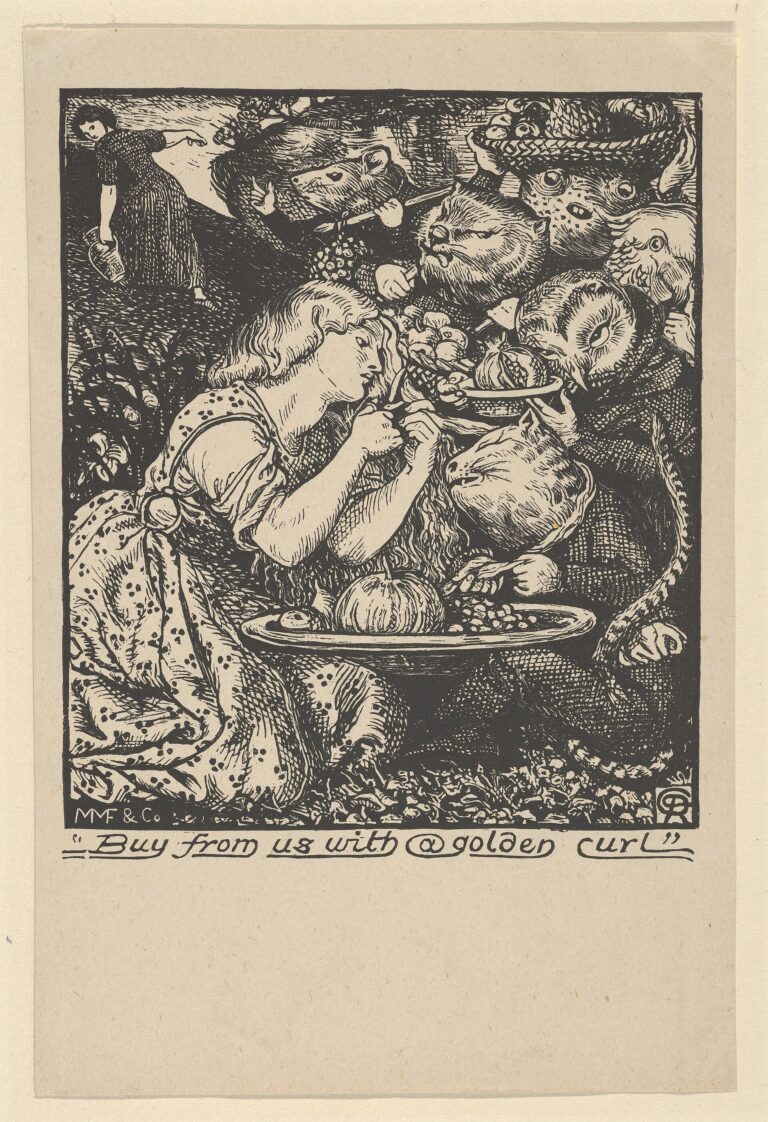
This is probably the oldest rule on the list, and it reaches well beyond Britain and Ireland. Persephone ate pomegranate seeds in the underworld and was bound to it. In the medieval romance of Thomas the Rhymer, the Queen of Elfland warns Thomas not to touch the fruit of her garden, because to eat it is to be lost. Irish tales are full of people glimpsed at a faery feast who must not be allowed to taste anything, or they will never come home. Christina Rossetti built a whole poem on it in Goblin Market (1862): Laura eats the goblin fruit and wastes away, and only her sister’s refusal to eat saves her.
The logic is the logic of hospitality. To eat at someone’s table is to accept their protection and their claim. In Faerie that claim does not expire.
Modern practice turns this around. People who work with the fae leave food and drink for them, milk, cream, bread, honey, a little whisky. That is giving, not taking, and the old stories are comfortable with it. The trouble starts when the traffic runs the other way.
3. Give freely, take nothing, and be careful with thanks
Three related rules live here.
First, take nothing from a faery place. Not a stone from a rath, not a branch from a lone thorn, not the gold a leprechaun shows you. Countless Irish and Scottish stories end with the man who carried something home from the hill and found it turned to leaves by morning, or found his luck gone with it.
Second, give without bargaining. Offerings in the old sense were not payment for services. They were courtesy, the way you would set out a cup for a guest. The household brownie of Scotland and the north of England is the famous case: he works through the night for a bowl of cream and a bannock left by the fire, and the moment anyone tries to pay him, with a suit of clothes, he takes offence and leaves for good.
Third, the matter of “thank you”. You will read online that you must never thank a faery, because it creates a debt. That exact wording is more internet than ballad. But it grows out of something real: the brownie stories above, and a wider sense that the fae prefer a gift to a word. If you want to acknowledge them, leave something. Say you are grateful if you must, but don’t imagine the words settle an account.
4. Keep your word to the letter, and listen to theirs
Faeries in folklore keep bargains with a ruthlessness that makes lawyers look sentimental. The deal is honoured exactly as spoken, no more and no less, and any looseness in your wording is your problem. Tam Lin’s Janet wins him back from the Fairy Queen because she does precisely what he told her to do, holding on through every transformation and never letting go. The people who lose in these stories are the ones who assumed a reasonable reading.
The flip side is the question everyone asks: can the fae lie? The rule that they cannot is largely a modern fantasy convention, popularised in the last few decades of novels. In the older material faeries deceive constantly, with glamour, with misdirection and with technically true statements that mean something else. What the old stories do insist on is that the fae hold humans to their word. So the practical rule is the same either way. Say exactly what you mean, promise nothing lightly, and if you promise, keep it.
5. Know the protections
Ask any folklorist about “fae weaknesses” and you will get a surprisingly consistent list across Britain, Ireland and Scandinavia:
- Iron. The great one. A horseshoe over the door, iron scissors under the cradle, a knife in the doorframe. Cold iron turns faeries aside in story after story, which may be a memory of an older people meeting a newer metal.
- Rowan. The mountain ash, planted by the house and tied in crosses with red thread. In Scotland it was the standard defence for byre, cradle and churn. I’ve written more about rowan and the other faery trees.
- Salt and bread. Both are human, homely and ordinary, and both were carried in the pocket on night journeys. Bread especially: “a bit of bread in the pocket” is the single most common charm in Irish accounts.
- St John’s wort and four-leaf clover. The herb protects; the clover breaks glamour and lets you see the fae as they are.
- Turning your coat inside out. The cure for being pixy-led in Devon and Cornwall. If the path you know has stopped making sense, reverse a garment and the spell breaks.
- Running water and church bells. The fae are said not to cross the first and to flee the second.
None of these are weapons. They are the folk equivalent of locking your door. The old attitude was not to go hunting faeries with a horseshoe but to be sensibly prepared when you walked home late.
6. Respect their places and their times
Certain places belonged to them and were left alone: the raths and ringforts of Ireland, the lone hawthorn in the middle of a field, the rings of darker grass in a meadow, the green hills with a hollow sound. Farmers ploughed around them. Road builders, famously, still sometimes do. You did not build a house on a faery path, and if you had built one by mistake, you left the front and back doors open at night so the procession could pass through.
Certain times belonged to them too. May Eve and Halloween above all, when the boundaries were thin and the fae rode out; Midsummer; dusk and midnight generally. On those nights you stayed in, or you carried your bread and salt. There is a whole calendar of faery holidays if you want to see the pattern across the year.
The principle under both is simple. The fae were understood as neighbours with their own territory and their own hours. Trespass was the surest way to meet the unfriendly kind.
Questions people ask about the rules of the fae
Why are the fae dangerous?
Because, in the stories, they are powerful, proud, bound by their own code and not by ours, and largely indifferent to human comfort. Not evil, usually. Indifferent, with a long memory for insults. The worst outcomes in the lore, the stolen child, the abducted bride, the man who danced himself to death, almost always follow a broken rule. I go into the temperament question properly in Are Faeries Good or Bad?
Do the fae need to be invited in?
That is a vampire rule, not a faery one. Faeries in folklore come and go through houses as they please, which is exactly why people hung iron and rowan over the threshold. What does matter is hospitality once they are there: the clean hearth, the bowl of cream, the door left open for the procession.
What happens if you kiss a fae?
In the ballads, you don’t get to leave. Thomas the Rhymer kisses the Queen of Elfland under the Eildon Tree and serves her seven years for it. The leannán sídhe of Irish tradition takes a mortal lover and burns through him, leaving a brilliant poet with a short life. Faery romance in the old sense is a binding, not a date.
What happens if you fall for a faery trap?
Usually one of three things: you lose time (a night’s dancing turns out to be a hundred years), you lose your way (pixy-led, until you turn your coat), or you lose yourself (glamoured into taking a bargain you did not understand). The remedies are the ones above. Iron, bread, a reversed coat, and the help of someone outside the ring who can pull you out.
Is “fae” the same as “fairy”?
Same root, different flavour. I’ve written a whole piece on fairy, faery, faerie and fae and when each is used.
A last word
Folklore is not a rulebook handed down from the fae themselves. It is centuries of people comparing notes on what went wrong and what seemed to help. Read it that way and the six rules stop looking like superstition and start looking like manners: don’t overshare, don’t take what isn’t yours, keep your promises, be prepared, and don’t trespass. Most of us could stand to follow them with other humans.
If you would like to keep both courts close while you learn their habits, the Creatures of the Fae playing cards put the whole roster in your hands: Oberon, Titania and Puck for the Seelie side, and the Erlking, Mab and the Red Cap for the Unseelie.
Full disclosure: The Everyday Fae has a connection to the makers of the Creatures of the Fae deck.
Sources and further reading
- Katharine Briggs, A Dictionary of Fairies (1976), entries on brownies, changelings, iron, rowan, and “taboos”.
- Francis James Child, The English and Scottish Popular Ballads: “Thomas Rymer” (Child 37) and “Tam Lin” (Child 39).
- W. B. Yeats (ed.), Fairy and Folk Tales of the Irish Peasantry (1888).
- Lady Gregory, Visions and Beliefs in the West of Ireland (1920).
- Christina Rossetti, Goblin Market (1862).
- Edward Clodd, Tom Tit Tot: An Essay on Savage Philosophy in Folk-Tale (1898), on the name-of-the-helper stories.