The Seelie and Unseelie Courts: Who Belongs to Each Faery Court
The short answer: the Seelie Court is the faery host in a good mood, and the Unseelie Court is the same host when it is not. In Scottish lore the Seelie fae repay a kindness and usually warn you before they punish you. The Unseelie are the ones you do not want to meet on a dark road: redcaps, the sluagh, the riders who need no reason. You will want to know who keeps company with whom. That is most of what follows.
If you read modern fantasy, you have probably met the Seelie and Unseelie Courts as two rival kingdoms, one of summer and one of winter. The folklore behind them is older, smaller and more interesting than that. It comes mostly from Scotland, and it is less about two kingdoms than about two kinds of luck.
What “seelie” means
Seelie is an old Scots word meaning happy, lucky or blessed. It shares a root with the Old English sǣl, good fortune, and it is a cousin of the English word “silly”, which once meant blessed before it drifted toward foolish. The fair folk were called the seely wights, the blessed creatures, and their company the Seelie Court.
Calling them “blessed” was partly good manners. People across Scotland and Ireland avoided naming the fairies directly and used flattering titles instead: the Good Neighbours, the Gentry, the Good People. You spoke well of them in case they were listening.
Unseely was simply the opposite: unlucky, unhappy, unholy. The Scots poets William Dunbar and David Lyndsay both used it, and the phrase “Unseelie Court” appears in print in the Edinburgh Magazine in 1819.
The Seelie Court: who belongs to it
The folklorist Katharine Briggs described the Seelie fairies as the kindlier sort. They would ask humans for help, warn someone who had offended them before taking revenge, and repay a kindness. They travelled together in troops and courts.
Kindly is not the same as safe, though. Seelie fairies still avenged insults and loved mischief. In the ballad Allison Gross, recorded in Aberdeen around 1783, a witch turns a man into a loathsome worm; it is the seely court, riding past on Halloween, whose queen stops, strokes him three times and gives him back his own shape. Help came, but only because the court happened to ride by and the queen chose to stop.
The Unseelie Court: who rides with it
The Unseelie were everything a traveller feared on a dark road. Briggs grouped them with the Sluagh, the host of restless dead said to fly over the Highlands at night, carrying people off and loosing elf-shot at cattle and men. In the same company she placed:
- Redcaps, who haunted ruined castles along the Scottish Border and kept their caps red with the blood of travellers.
- The nuckelavee of Orkney, a skinless horse-and-rider horror that came out of the sea.
- The baobhan sith, beautiful Highland women in green who danced with hunters and drank their blood.
- Shellycoats, water spirits hung with clattering shells that led wanderers astray.
Elf-shot deserves a word of its own. Ancient flint arrowheads turned up by the plough were taken as proof: these were the darts the fairies fired, and a sudden sharp pain, or a cow that dropped in the field, had been “elf-shot.”
Even the court of a fairy queen could be terrifying. In Tam Lin, the most famous fairy ballad of all, Tam Lin fears he will be paid to hell as the court’s seven-yearly tithe, and he can only be saved if his true love pulls him from his horse as the fairy procession rides by on Halloween night.
Two courts, or two moods?
Here is the part modern fiction usually skips. The old sources draw no neat map of two kingdoms at war. Seelie and Unseelie describe the same Otherworld seen in two lights: the fair folk when they are pleased with you, and when they are not. The same fairy could be both, depending on how you behaved.
Writing about Ireland in 1888, W. B. Yeats divided the fairies another way, into trooping fairies who lived in companies and solitary fairies who kept to themselves, and he found the solitary kind far more likely to be grim and dangerous. Either way the lesson is the one that runs through this whole site: dark does not mean evil, and kind does not mean tame. We have written more about that in The Dark Side of the Fae and Are Faeries Good or Bad?.
The two courts in the Creatures of the Fae deck
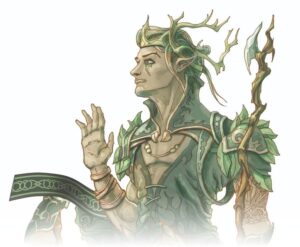
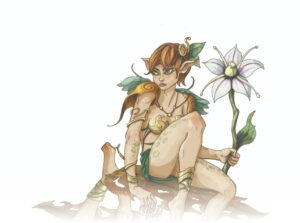
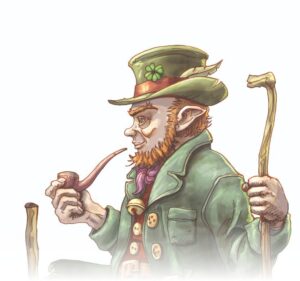
If you would like faces to go with these names, the Creatures of the Fae playing cards, illustrated by Guzo Borboa, divide their court cards along exactly these lines, with two suits for the Seelie Fae and two for the Unseelie Fae:
The Seelie Fae: Diamonds
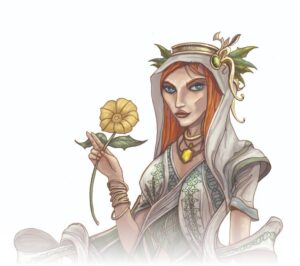
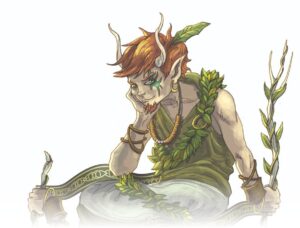
The Seelie Fae: Hearts
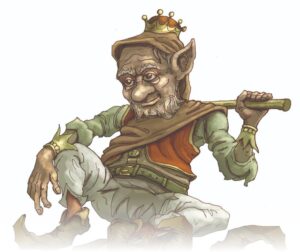
The Unseelie Fae: Spades
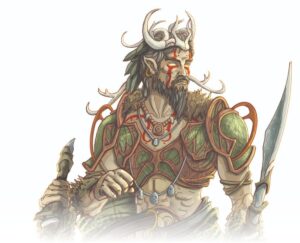
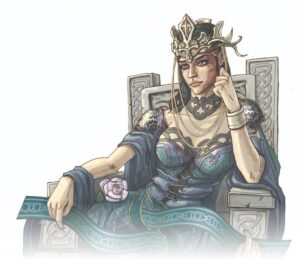
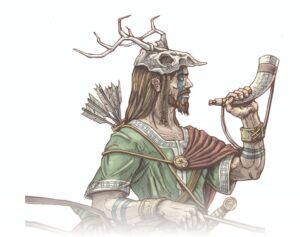
The Unseelie Fae: Clubs
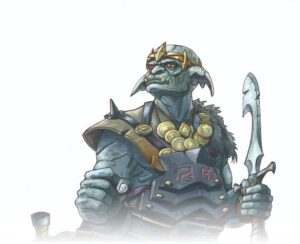
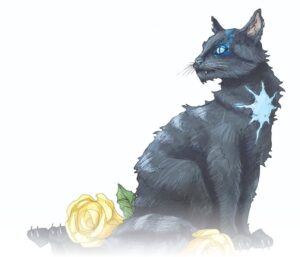
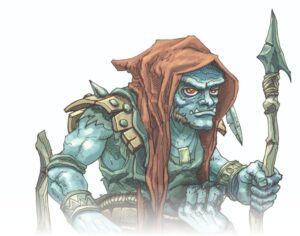
Court card figures from the Creatures of the Fae deck. Illustrations by Guzo Borboa.
Each card links to its own post: one for each of the twelve court cards, with the folklore behind the figure and why it sits in the court it does.
They come from all over the old Celtic and Germanic world, not just Scotland, and folklore would argue over a few of the placings. Mab alone has been a fairy queen, a midwife and a bringer of bad dreams, depending on who was telling the story. But the split captures the idea well: the helpful and the dangerous, the same Otherworld seen in two lights.
Reading about them is one thing. If you would rather have them in your hand, the deck is on Amazon. Mind the Red Cap.
Full disclosure: The Everyday Fae has a connection to the makers of the Creatures of the Fae deck.
Questions people ask about the faery courts
What creatures are in the Unseelie Court?
More than you would care to meet. In Scottish and Border folklore: the sluagh, the restless dead who fly over the Highlands at night; redcaps, who haunt ruined castles on the Border; the nuckelavee of Orkney; the baobhan sith of the Highlands; and the shellycoats of the rivers and shore. Katharine Briggs put every one of them in the dark company, and I would not argue with her. In the Creatures of the Fae deck the Unseelie court cards are the Erlking, Queen Mab, Gwyn ap Nudd, the Goblin King, the Cait Sith and the Red Cap.
Who is the queen of the Unseelie Court?
Nobody. Folklore never crowned one. Modern fantasy usually hands the throne to Mab; Jim Butcher’s Dresden Files novels, for one, make her queen of the Winter Court, their version of the Unseelie. The nearest thing in old Scottish writing is Nicneven, a witch-queen who turns up with her band of nymphs at Halloween in a verse quarrel written by Alexander Montgomerie around 1580. Later writers linked her with Hecate, Walter Scott among them, and some called her a queen of the fairies. Folklorists such as Jacqueline Simpson doubt she was ever meant as one, and I side with the doubters. In the deck, the two Unseelie queens are Mab and the Cait Sith.
What is a faery court?
The faery company, with a king or queen at its head. Nothing grander than that. In the old ballads a court is something you see riding past: the procession that carries Tam Lin on Halloween night, or the Queen of Elfland on her horse in Thomas the Rhymer. Calling them a court was one more polite name, like the Good Neighbours. You will notice people were very polite.
Is the Seelie Court good and the Unseelie Court evil?
No. The old sources are firm about it, and so am I. Seelie fae still punished an insult, and even a kindly court could pay a tithe to hell. Do not mistake a good mood for a good nature. I go into that properly in Are Faeries Evil?
Sources and further reading
- Seelie, Wikipedia (etymology, ballads and Briggs’s classification)
- Katharine Briggs, A Dictionary of Fairies (1976)
- The ballads Allison Gross (Child 35) and Tam Lin (Child 39)
- W. B. Yeats, Fairy and Folk Tales of the Irish Peasantry (1888)