Fairy, Faery, Faerie or Fae? What Each Spelling Means
Fairy, faery and faerie are three spellings of one word. Fae is a close cousin. None of them, by itself, tells you whether the creature has wings, grants wishes or is going to hide your keys. But people do use them differently, and once you know the history the differences make sense.
Here is the short version, then the long one.
Fairy, faery, faerie and fae: the quick answer
- Fairy is the standard modern spelling. It covers everything from Tinker Bell to the tooth fairy, and it is the word dictionaries list first.
- Faery is an older spelling, revived by poets and folklorists. Writers often choose it to signal the beings of folklore rather than the ones in children’s books. It can also mean the realm itself.
- Faerie is the oldest English form, from Old French. Edmund Spenser used it in The Faerie Queene (1590). Today it most often names the land, the Otherworld, rather than one creature.
- Fae comes from the same Old French root (fae, later fée, a fay). In modern use it is the collective: the fae, the fair folk. Many fantasy writers prefer it.
- Fey is a different word altogether. It comes from Old English fǣge, “fated to die”, and later meant otherworldly or strange. The two have blurred together, but they started apart.
So when someone asks what faery means: it is simply a fairy, spelled the old way, and often chosen on purpose to mean the wilder, older sort.
Where the word comes from
The trail runs back through French to Latin. The Romans had the Fata, the Fates, the three sisters who spun and cut the thread of a life. In Old French that became fée, a fay, an enchantress. From fée came faerie, which did not mean a creature at all. It meant enchantment, or the state of being enchanted, or the land where enchantment lived.
English borrowed the word in the Middle Ages with that meaning intact. Chaucer’s Wife of Bath opens her tale with it, looking back to the days of King Arthur when “al was this land fulfild of fayerye”, the whole country was full of faery. She means the magic, the glamour, and only by extension the people who worked it.
Over the next two centuries the word slid from the enchantment to the enchanters, and the spelling drifted toward fairy. By Shakespeare’s time a fairy was a being, and A Midsummer Night’s Dream (around 1595) fixed Oberon, Titania and Puck in the public imagination as the fairy court.
If you want the deeper story on that court, and on why Scotland split the fae into two of them, I’ve written about the Seelie and Unseelie Courts separately.
The fairy we picture, and where she came from
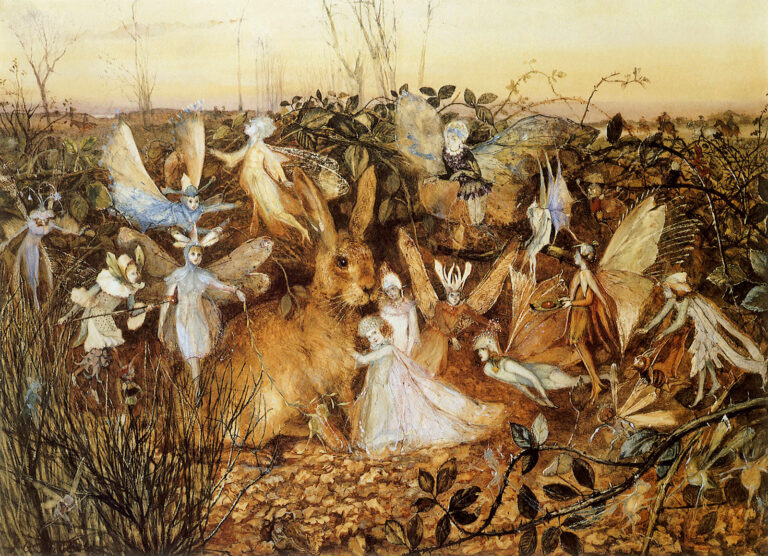
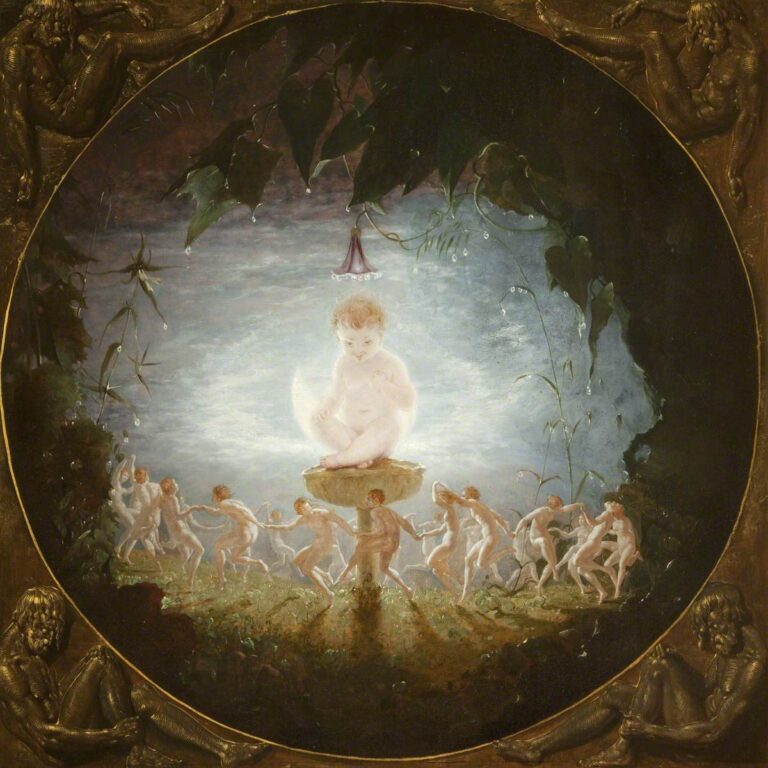
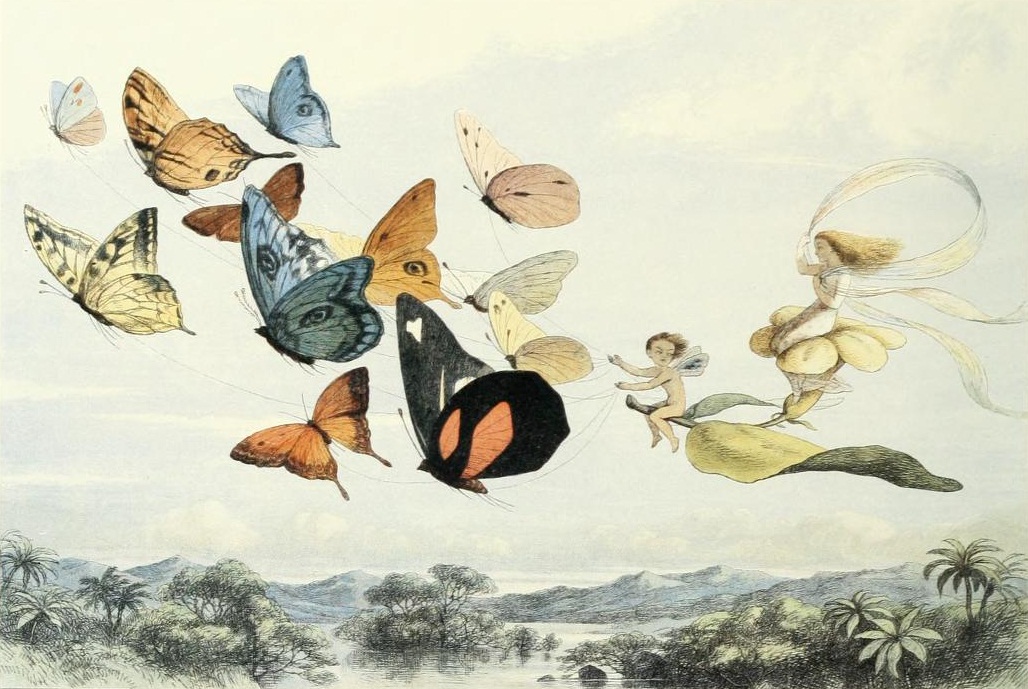
Say “fairy” to most people and you get a small, pretty, winged woman with a wand. That picture is young. The wings arrive in earnest with eighteenth and nineteenth century painting and the Victorian stage. The wand is a borrowing from the fairy godmother of French literary tales, Perrault’s Cinderella above all. The miniature size owes a great deal to Shakespeare’s fairies, who creep into acorn cups and wage war on bats for their leather wings.
Then came the Victorians, who adored fairies and painted them by the thousand, and the Edwardians, who gave us Tinker Bell (Peter Pan, 1904). Disney finished the job in 1953. Somewhere in there the fairy stopped being something you feared on a dark road and became something you put on a nursery wall.
Nothing wrong with that. It just isn’t the whole story.
Why writers reach for “faery” instead
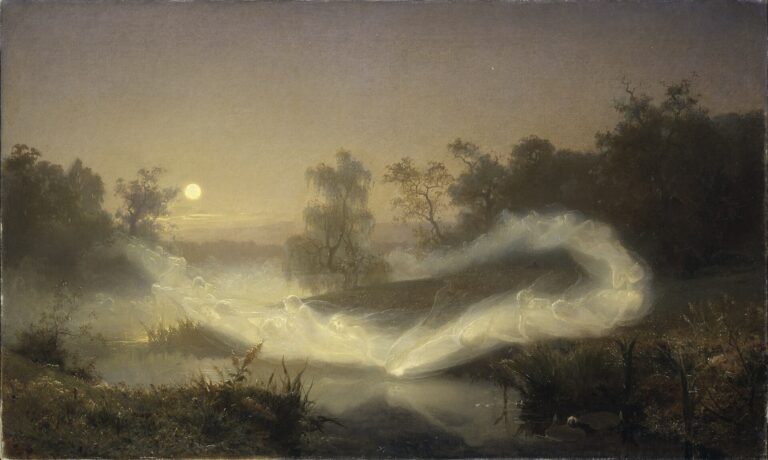
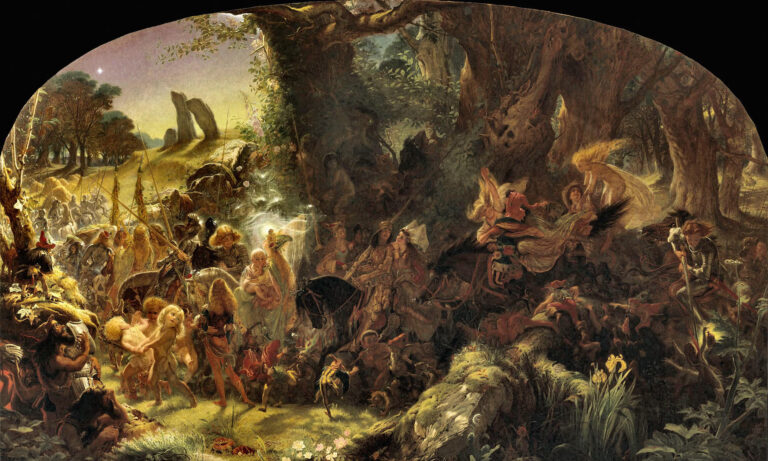
The older stories are stranger. The fair folk of Irish, Scottish, Welsh and English tradition steal children and leave changelings. They lead travellers astray on the moor. They dance you to exhaustion inside a faery ring, and when you stumble out a hundred years have passed. They can be generous, and they can be dreadful, and the one thing they are not is small and sweet.
So writers who want that older flavour often change the spelling to warn you. W. B. Yeats used “faery” in his poems, “the faery vats” of The Stolen Child among them. Brian Froud and Alan Lee called their 1978 book Faeries, and that book did more than any other to put the spelling in front of a modern audience. J. R. R. Tolkien, who disliked the twee Victorian fairy with a passion, wrote about “Faërie” as the Perilous Realm in his essay On Fairy-Stories, and insisted that the word properly named the country, not its inhabitants. More recently, fantasy novelists from Holly Black to Sarah J. Maas have leaned on faerie and fae for the same reason: it tells the reader to expect teeth.
That is the convention I follow on this site. When I write faery, I mean the beings of folklore, the ones our great-grandparents were careful not to name aloud.
The names people used instead
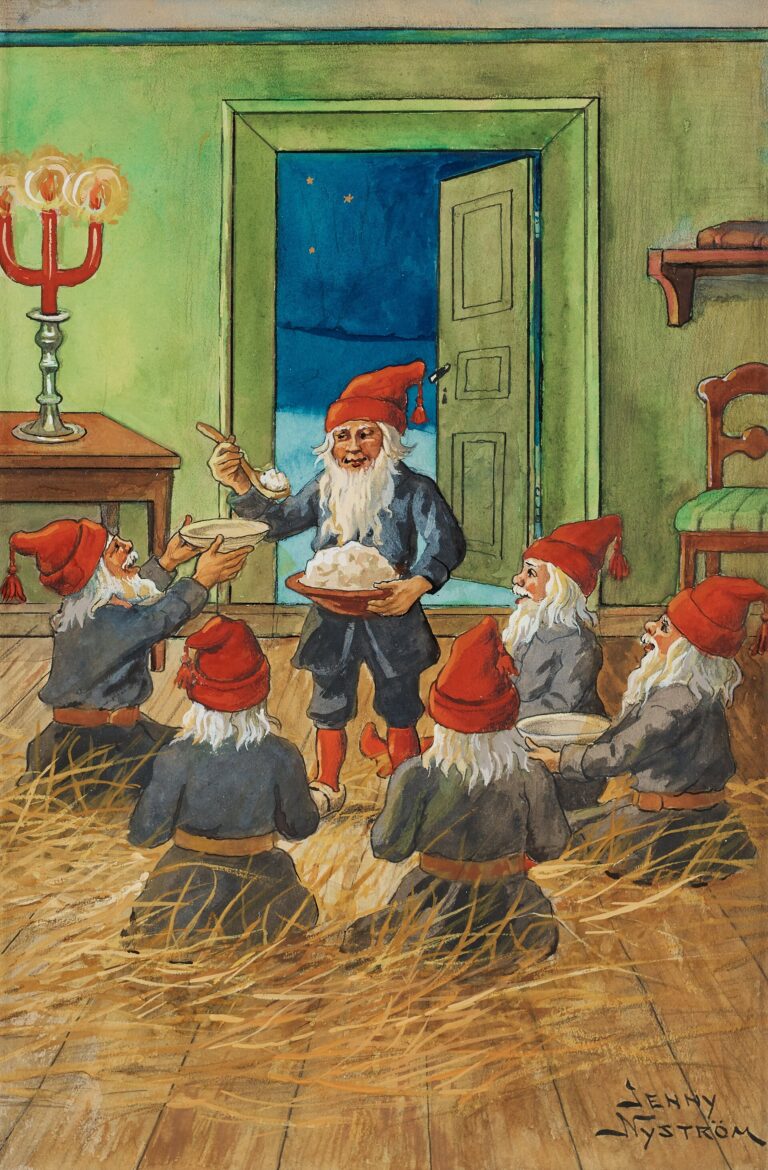
That carefulness is worth a word of its own. In Ireland and Scotland, people avoided saying fairy at all, because naming them was thought to call them. Instead they said the Good People, the Gentry, the Good Neighbours, the Fair Folk, Themselves. In Irish they are the aos sí or daoine sídhe, the people of the mounds. In Welsh, the Tylwyth Teg, the Fair Family. All of these are polite, slightly nervous euphemisms, the way you might speak kindly of a neighbour who could hear you through the wall.
“Fae” and “faery” sit comfortably alongside those. “Fairy” never quite does.
Which spelling should you use?
If you are writing about a particular book, tradition or author, follow their spelling. Spenser is Faerie, Shakespeare is fairy, Yeats is faery, and it would be odd to correct any of them.
Otherwise, pick the one that matches what you mean. Fairy for the familiar winged figure. Faery or fae for the folk of folklore. Faerie for the place. You do not need to pass a spelling test before you are allowed to be curious about them, and nobody who knows the subject will think less of you for any of the four.
The more interesting question is never how to spell them. It is how to approach them. For that, start with the old rules for dealing with the fae, then ask whether faeries are good or bad. If you would rather begin outdoors, here is how to start a faery garden. A pot of something growing is a fine place to meet them.
Sources and further reading
- Oxford English Dictionary, entries for fairy, faerie and fay.
- Geoffrey Chaucer, The Wife of Bath’s Tale, in The Canterbury Tales (c. 1390s).
- Edmund Spenser, The Faerie Queene (1590).
- J. R. R. Tolkien, “On Fairy-Stories” (1947), in Tree and Leaf.
- Brian Froud and Alan Lee, Faeries (1978).
- Katharine Briggs, A Dictionary of Fairies (1976), especially the entries on euphemistic names.