The Red Cap: The Murderous Goblin of the Border Towers
If you are ever caught by nightfall near a ruined tower on the Scottish Border, the old advice is not to go inside. The Red Cap lives there. He is the most straightforwardly murderous creature in all of British faery lore, a short, thick-set old man with long teeth, talons for fingers, red eyes and a cap that he keeps red by dipping it in the blood of travellers. He is the Jack of Clubs in the Creatures of the Fae deck, the knave of the Unseelie Court, and he is the one card in the twelve that nobody has ever tried to make cute.
What the Red Cap is
The fullest description comes from William Henderson, who collected the folklore of the Border counties in the 1860s. The Red Cap, he says, haunts old peel towers and castles, especially those with a history of wickedness, and is “a short thickset old man, with long prominent teeth, skinny fingers armed with talons like eagles, large eyes of a fiery-red colour, grizzly hair streaming down his shoulders, iron boots, a pikestaff in his left hand, and a red cap on his head”. Travellers who shelter in his tower are pelted with stones. If he kills one, he dyes his cap in the blood. Human strength is no use against him; the only defences are words of Scripture or the sight of a cross, at which he gives a dismal yell, vanishes in flame, and leaves behind one large tooth.
Later retellings add the detail that the cap must be freshly dyed or the Red Cap will die, which gives him a motive. Henderson does not say it, but it is the kind of logic the stories invite.
He goes by other names along the Border: Powrie, Redcomb, Bloody Cap, Dunter. The Dunters are said to make a sound like the beating of flax in old towers, and a change in the rhythm foretells a death. Some antiquarians thought the whole tribe of them was a memory of the Picts, or of human sacrifices under the foundation stones of the towers. More likely they are what happens when a landscape full of ruins meets three centuries of cross-border murder.
Robin Redcap and Lord Soulis
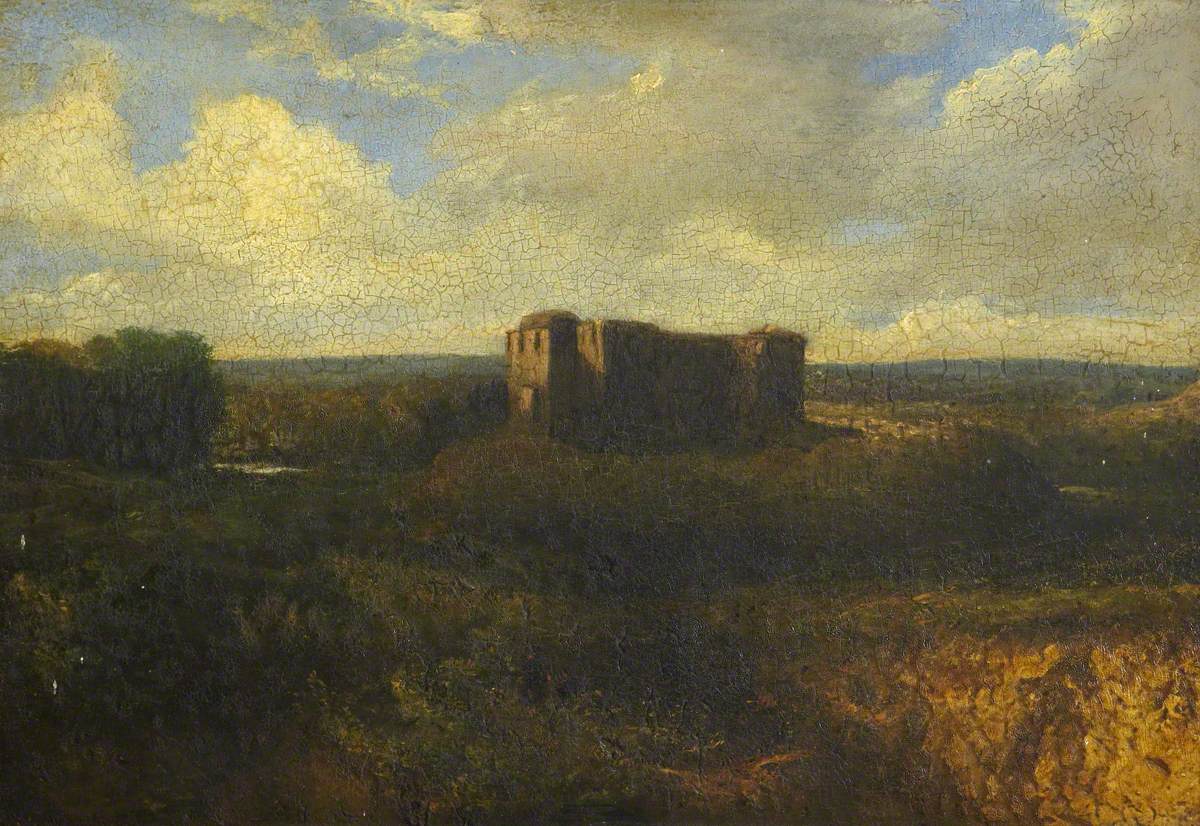
The Red Cap’s one named appearance is as the familiar of a real man. William de Soulis was lord of Hermitage Castle in Liddesdale in the early 1300s, and in history he was imprisoned at Dumbarton for conspiring against Robert the Bruce in 1320 and died there. In legend he was something else entirely: a sorcerer who kept a Red Cap called Robin in a locked chest, who could not be bound by rope or harmed by steel because of Robin’s protection, and who terrorised the valley until the people took him to the stone circle at Ninestane Rig, wrapped him in lead and boiled him alive in a brass cauldron. The castle itself is said to be sinking into the ground under the weight of its own evil.
John Leyden put the legend into a ballad, “Lord Soulis”, which Walter Scott printed in the Minstrelsy of the Scottish Border in 1802, and it has been the Border’s favourite ghost story ever since. Hermitage, a huge grim box of a castle in an empty valley, looks exactly like the kind of place a Red Cap would choose.
Red Caps elsewhere
The name travelled, and it did not always mean the same thing. In Cornwall, “red-caps” was simply a term for the fairies in general. In Perthshire there was a gentler Red Cap who lived in a high room at Grantully Castle and brought luck to anyone who saw or heard him. The Dutch kabouter, who wears a red cap and does housework, is a brownie in a different hat, and the garden gnome descends from him. None of these is the Border creature. The Border creature is unique in being a faery with no good side at all.
Why he is the Jack of Clubs
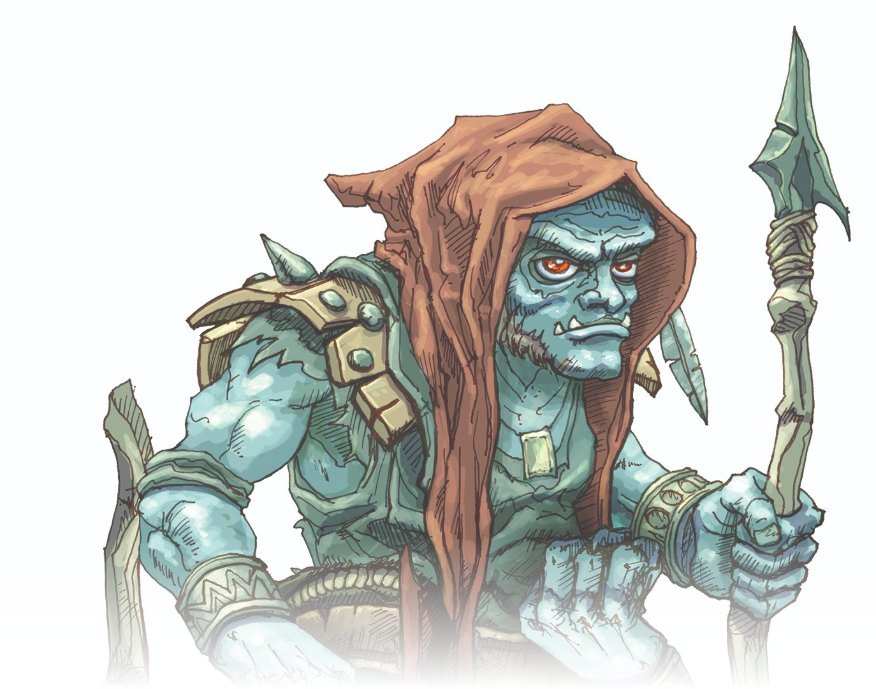
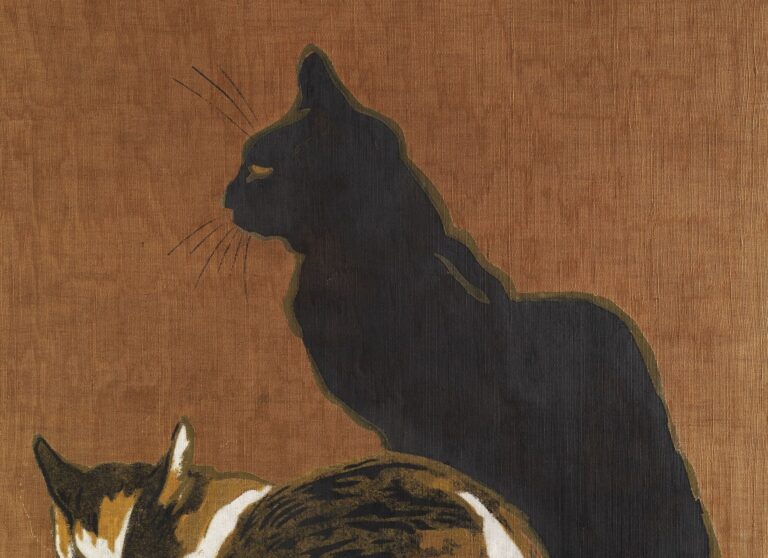
The jack is the foot soldier of the court, the one who does the rough work, and the Red Cap is the rough work of the Unseelie Fae. The Clubs court in the Creatures of the Fae deck is the dark court of this world, the mine and the moor and the ruin: the goblin as king, the Cat Sìth as queen, and in the tower, with a pikestaff and a wet cap, the knave. Set him next to Puck, the knave of the other side, and you have the whole range of what the fae were thought to be: from a joke in the dairy to a death in a doorway.
He is, I’ll admit, my favourite card in the deck. Nobody has ever drawn him better.
Sources and further reading
- William Henderson, Notes on the Folk-Lore of the Northern Counties of England and the Borders (1866; 2nd ed. 1879), “Redcap”.
- Walter Scott (ed.), Minstrelsy of the Scottish Border (1802), including John Leyden’s “Lord Soulis”.
- Katharine Briggs, A Dictionary of Fairies (1976), “Redcap”, “Dunters”, “Powries”.
- William Bottrell, Stories and Folk-Lore of West Cornwall (1880), on Cornish red-caps.
The twelve court cards
This post is one of twelve, one for each court card in the Creatures of the Fae deck. The Seelie Fae hold the red suits and the Unseelie Fae the black.
Seelie Fae
- Oberon, King of Diamonds
- Titania, Queen of Diamonds
- Puck, Jack of Diamonds
- the Brownie, King of Hearts
- the Pixie, Queen of Hearts
- the Leprechaun, Jack of Hearts
Unseelie Fae
- the Erlking, King of Spades
- Queen Mab, Queen of Spades
- Gwyn ap Nudd, Jack of Spades
- the Goblin, King of Clubs
- the Cat Sìth, Queen of Clubs
- the Red Cap, Jack of Clubs (this post)
The deck itself, with all twelve court cards, is here on Amazon.
Full disclosure: The Everyday Fae has a connection to the makers of the Creatures of the Fae deck.