Queen Mab: The Fairies’ Midwife and the Queen of Bad Dreams
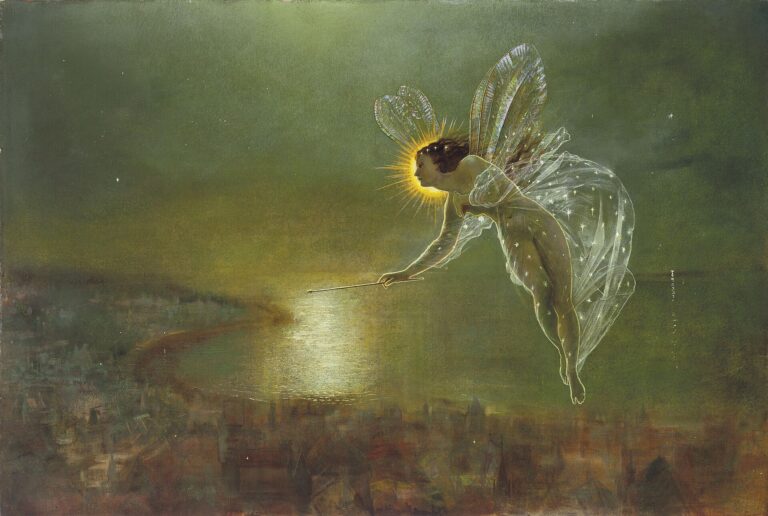
“O, then I see Queen Mab hath been with you.” Mercutio’s speech in Romeo and Juliet is the first time the name appears in literature, and it arrives fully formed: a fairy no bigger than an agate stone on an alderman’s ring, driving a chariot made of a hazelnut shell, drawn by a team of little atomies, over the noses of sleepers to give them their dreams. Lovers dream of love, lawyers of fees, soldiers of cutting throats. She is “the fairies’ midwife”, and she is the Queen of Spades in the Creatures of the Fae deck.
Where the name came from
Nobody knows, which has not stopped anyone guessing. The old favourite is Medb, the warrior queen of Connacht in the Irish Táin, whose name is pronounced roughly “Mave”; the connection is attractive and almost certainly wrong, since there is no trace of Medb in sixteenth-century England. A better candidate is the English word mab itself, which in Shakespeare’s day meant a slattern or a loose woman, the sort of word you might attach to a fairy who tangles hair and gives maids bad dreams. There is also the Welsh mab, meaning son or child, which would be odd for a queen. Take your pick. Shakespeare may simply have liked the sound.
Dreams, elf-locks and the hag
Mercutio’s Mab is funny for twenty lines and then turns. She is the one who “plats the manes of horses in the night, and bakes the elf-locks in foul sluttish hairs”, the tangled knots that country people blamed on fairies and were afraid to comb out. And she is the hag who presses on girls as they sleep, “when maids lie on their backs”, the nightmare in the old sense of the word, the thing that sits on your chest in the dark. By the end of the speech Romeo has to stop him: “Peace, peace, Mercutio, peace, thou talk’st of nothing.”
That double nature is the key to her. She is tiny and comic and she is also the bringer of the dreams you would rather not have. That is why the deck puts her across from Titania rather than beside her. Titania is the fairy queen in daylight. Mab is the fairy queen at three in the morning.
Mab after Shakespeare
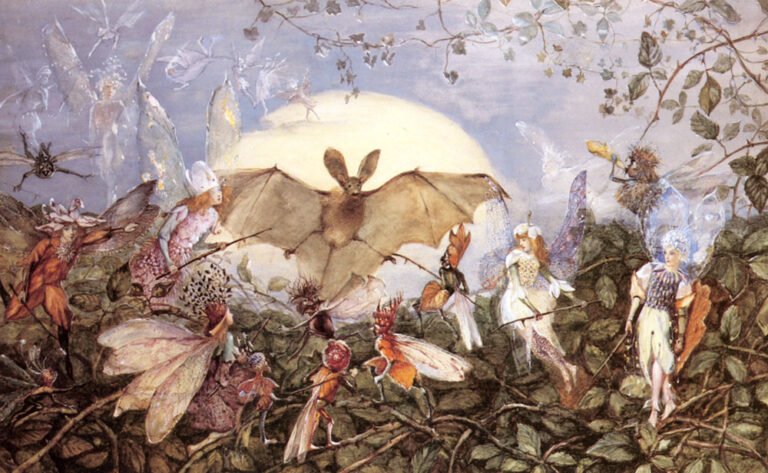
The Jacobeans adopted her at once, and they made her worse. In Ben Jonson’s entertainment for Queen Anne at Althorp in 1603, a satyr introduces “Mab, the mistress-fairy, that doth nightly rob the dairy”, who pinches maids black and blue, steals children and leaves changelings. Michael Drayton’s Nymphidia (1627) makes her Oberon’s queen outright and sends her off to a tryst with the knight Pigwiggen, with Puck and a jealous Oberon in pursuit; it is a mock-epic, and it fixed the idea of Mab as the queen of the little fairies for the next two centuries. Robert Herrick wrote her a court of her own.
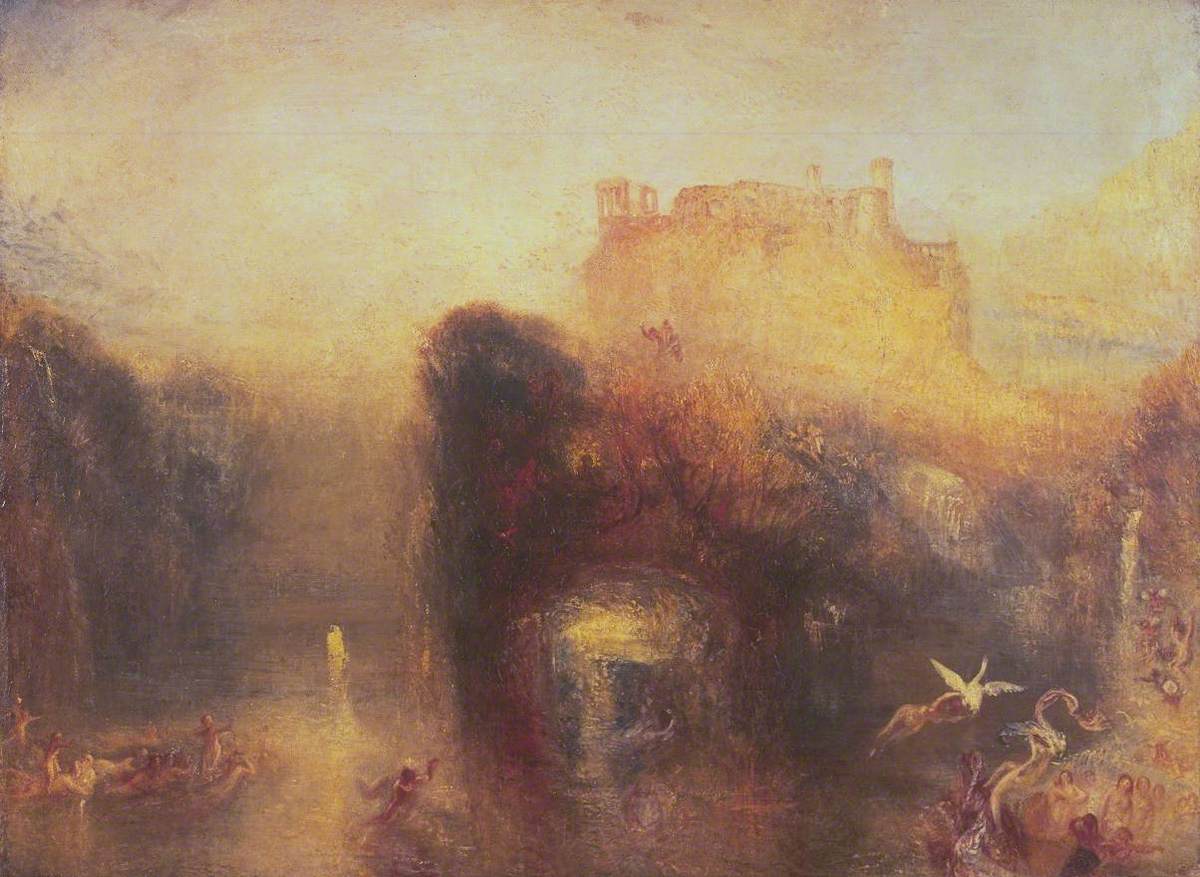
Then the poets took her seriously. Shelley’s Queen Mab (1813) is a long radical visionary poem in which the fairy queen carries a sleeping girl’s spirit through space and time and lectures her on tyranny, religion and the future of humanity; it was prosecuted for blasphemy and became a sacred text for Chartists. J. M. W. Turner painted Queen Mab’s Cave (1846) as a swirl of light and water. In Peter Pan in Kensington Gardens (1906) she is the fairy queen who grants Peter his wish to fly. And in the modern fantasy that has grown up around the Seelie and Unseelie Courts, Mab is almost always the Winter Queen, the dark one, from Jim Butcher’s Dresden Files onward.
Why she is Unseelie
Not because she is wicked. Shakespeare’s Mab is a bringer of dreams, and dreams are neither good nor bad. She belongs with the Unseelie Fae because she works at night, because she is the fairy of the nightmare and the elf-lock and the stolen child, and because the tradition that followed her kept pushing her into the dark until the Winter Queen was the only Mab left. The Unseelie Court was never the court of evil; it was the court you could not bargain with. Dreams are like that.
On the card
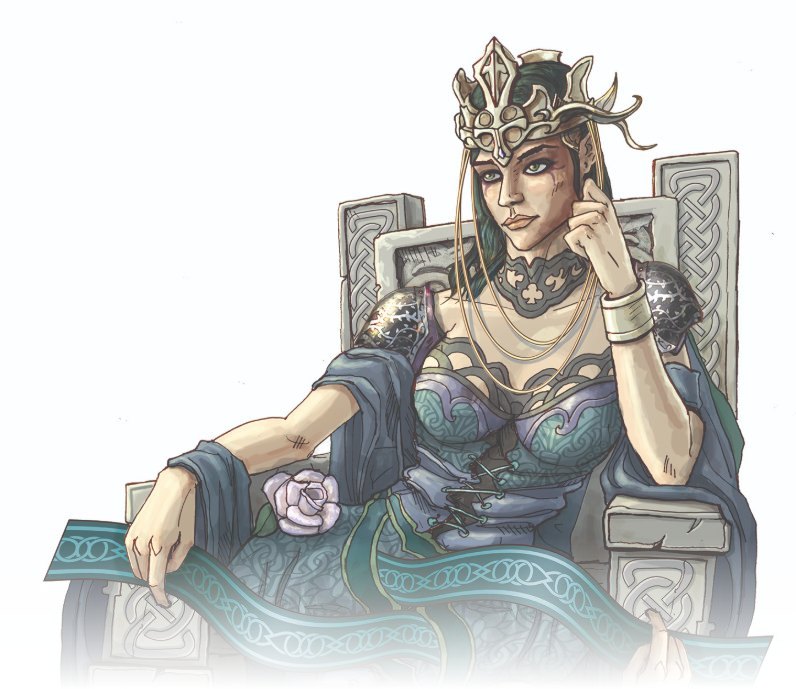
Mab is the Queen of Spades, between the Erlking and Gwyn ap Nudd, in the court of the Otherworld. The Queen of Spades has been the deck’s dark lady for as long as there have been fortune tellers to read her that way, and in the Creatures of the Fae deck that reputation finally has a face.
Sources and further reading
- William Shakespeare, Romeo and Juliet, I.iv (c. 1595).
- Ben Jonson, The Entertainment at Althorp (1603).
- Michael Drayton, Nymphidia, or the Court of Fairy (1627).
- Percy Bysshe Shelley, Queen Mab (1813).
- Katharine Briggs, The Anatomy of Puck (1959), on Mab and the diminutive fairies of the Jacobean poets.
- Katharine Briggs, A Dictionary of Fairies (1976), “Mab”, “Elf-locks”.
The twelve court cards
This post is one of twelve, one for each court card in the Creatures of the Fae deck. The Seelie Fae hold the red suits and the Unseelie Fae the black.
Seelie Fae
- Oberon, King of Diamonds
- Titania, Queen of Diamonds
- Puck, Jack of Diamonds
- the Brownie, King of Hearts
- the Pixie, Queen of Hearts
- the Leprechaun, Jack of Hearts
Unseelie Fae
- the Erlking, King of Spades
- Queen Mab, Queen of Spades (this post)
- Gwyn ap Nudd, Jack of Spades
- the Goblin, King of Clubs
- the Cat Sìth, Queen of Clubs
- the Red Cap, Jack of Clubs
The deck itself, with all twelve court cards, is here on Amazon.
Full disclosure: The Everyday Fae has a connection to the makers of the Creatures of the Fae deck.