The Brownie: Scotland’s Household Faery and the Rules for Keeping One
Of all the faeries in these twelve posts, the brownie is the one you would most want to meet. He is the household spirit of Scotland and the north of England, the small shaggy man who does the farm work while everyone sleeps and asks nothing for it but a bowl of cream. In the Creatures of the Fae deck he is the King of Hearts, which may seem a grand rank for a creature who sleeps in the barn. I think it is exactly right, and I’ll explain why.
What a brownie is
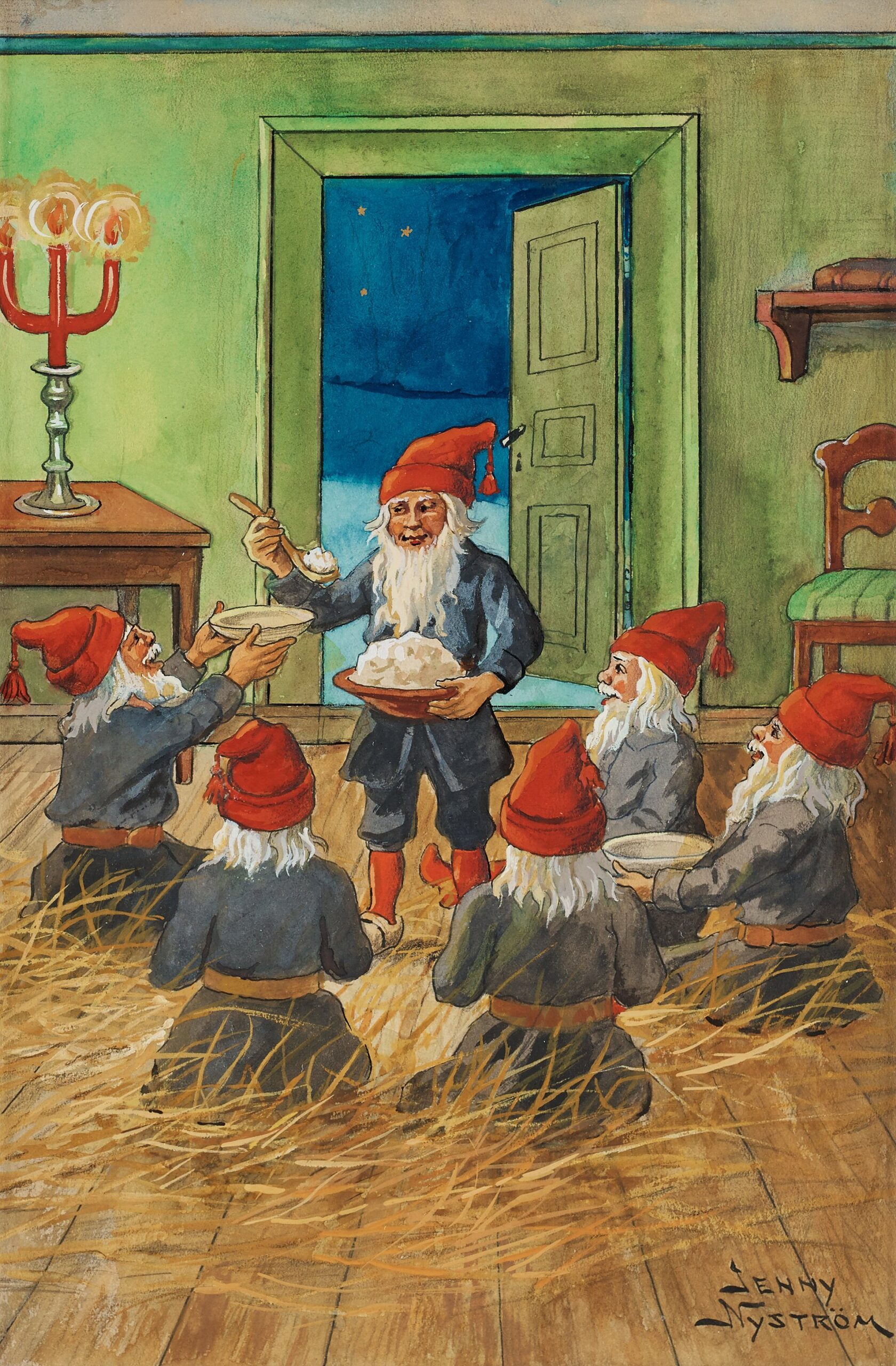
The descriptions are consistent across three centuries. A brownie is small, somewhere between a child and a short man, and brown all over, either from his skin or from his shaggy hair or from the rags he wears if he wears anything. He attaches himself to a house or a farm rather than to a person, and he may serve the same family for generations. He works at night: threshing the corn, churning the butter, reaping a field that needed reaping, finishing whatever the servants left undone. In the morning the work is done and nobody saw him do it.
King James VI, who did not approve of such things, describes the brownie in his Daemonologie (1597) as a spirit that “appeared like a rough man” and haunted houses “without doing any evill, but doing as it were necessarie turnes up and down the house”. He thought it was a devil in a friendly mask. His subjects mostly thought it was good luck.
The rules of keeping a brownie
A brownie is not paid. That is the whole point of him, and the stories are very firm about it. You leave out a bowl of cream or fresh milk and a bannock, a flat oatcake, by the hearth or in a corner of the byre, and you do not mention it. If you forget, the brownie sulks and the work stops, or small disasters begin. If you watch him, he leaves. And if you make the mistake of paying him, especially with clothes, he is gone for good.
The clothes taboo is the most famous brownie story and it is told in a dozen places. A grateful farmer leaves a little coat and hood, or a pair of breeches, for the brownie who has served him. The brownie finds the gift, puts it on, and is heard going out the door singing some version of:
Gie Brownie coat, gie Brownie sark,
Ye’se get nae mair o’ Brownie’s wark.
Nobody fully agrees why. Some tellers say the gift insults him, some that it frees him, some that the clothes are too fine and he goes off to show them to the gentry. The brownie of Blednoch in Galloway, celebrated in William Nicholson’s poem “Aiken Drum” (1828), left over a pair of breeches. One told in Berwickshire left because the clothes were made of coarse harden cloth instead of linen, and said so. The old rule underneath all the versions is the same: give to the fae, but never try to settle the account.
When a brownie goes bad
A brownie who has been insulted does not always leave. Sometimes he stays and turns into a boggart, the malicious house spirit of Yorkshire and Lancashire, who breaks crockery, pinches sleepers and makes life a misery until the family gives up and moves. In one well-known Lancashire tale the family loads the cart to flee and a neighbour asks if they are flitting; a voice from the churn on the cart answers, “Aye, we’re flitting.” The boggart has come too.
That double nature is why the brownie belongs in a deck about the fae at all. He is kindness with conditions, like all of them.
Cousins
Every part of the islands had its own version. England’s Robin Goodfellow is a brownie with a sense of humour, and I’ve written about him as Puck. The hob of the north of England, the bwbach of Wales, the fenodyree of the Isle of Man, the Highland gruagach who watches the cattle, all do the same work under the same rules. Further afield the Scandinavian nisse and tomte, and the German kobold in his friendlier moods, are plainly the same creature. Few faery types are so widely shared, which suggests the brownie answers a very old need: someone to thank for the work that gets done by nobody.
Why he is the King of Hearts
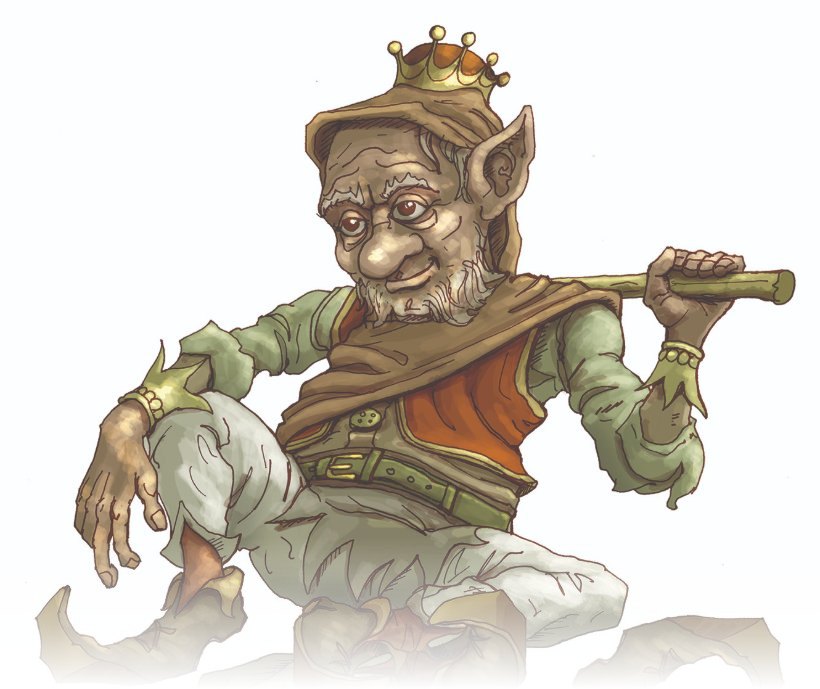
Hearts is the suit of the home, of love and loyalty. The brownie is the most loyal creature in folklore; he serves one house for a lifetime and asks nothing. He also keeps the hearth, which in the old farmhouse was the kingdom. Making him the king of that suit, rather than a jack or a minor card, is a small act of justice. The Creatures of the Fae deck puts the pixie beside him as queen and the leprechaun as jack, so the Hearts court is the court of the small, hard-working, hearth-and-field fae. It is the Seelie Court in its working clothes.
Sources and further reading
- King James VI, Daemonologie (1597), Book III, ch. 1.
- William Nicholson, “The Brownie of Blednoch” (“Aiken Drum”), 1828.
- James Hogg, The Brownie of Bodsbeck (1818).
- William Henderson, Notes on the Folk-Lore of the Northern Counties of England and the Borders (1866), on brownies, hobs and boggarts.
- Katharine Briggs, A Dictionary of Fairies (1976), “Brownie”, “Boggart”, “Hob”.
- J. G. Campbell, Superstitions of the Highlands and Islands of Scotland (1900), on the gruagach.
The twelve court cards
This post is one of twelve, one for each court card in the Creatures of the Fae deck. The Seelie Fae hold the red suits and the Unseelie Fae the black.
Seelie Fae
- Oberon, King of Diamonds
- Titania, Queen of Diamonds
- Puck, Jack of Diamonds
- the Brownie, King of Hearts (this post)
- the Pixie, Queen of Hearts
- the Leprechaun, Jack of Hearts
Unseelie Fae
- the Erlking, King of Spades
- Queen Mab, Queen of Spades
- Gwyn ap Nudd, Jack of Spades
- the Goblin, King of Clubs
- the Cat Sìth, Queen of Clubs
- the Red Cap, Jack of Clubs
The deck itself, with all twelve court cards, is here on Amazon.
Full disclosure: The Everyday Fae has a connection to the makers of the Creatures of the Fae deck.