The Cat Sìth: The Faery Cat Who Steals Souls at the Wake
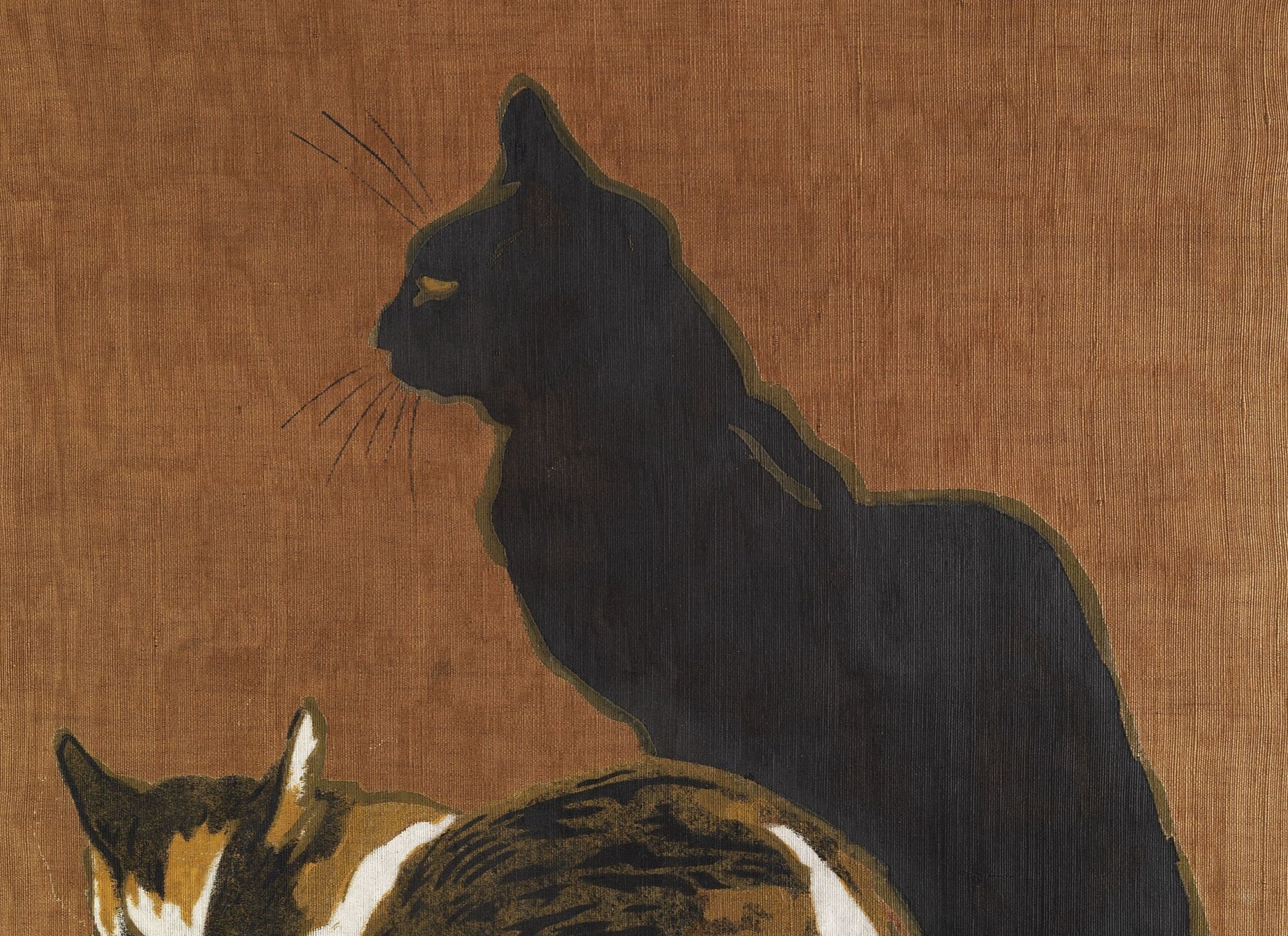
In the Highlands of Scotland there was a cat you did not want in the house when someone had died. The cat-sìth, the faery cat, was as big as a dog, black as a peat bog, with a single white spot on its chest, and it was believed to steal the souls of the dead before they could be buried. It is the Queen of Clubs in the Creatures of the Fae deck, and of the twelve court cards it is the only one that is not, in any sense, a person.
What the cat sìth is
The name is Scottish Gaelic: cat, cat, and sìth, of the faeries, the same word that gives the sìthean, the faery mound. (The Irish spelling is cat sí.) The descriptions agree on size and colour, large and black with the white breast-spot, and add that it walks on its hind legs when it thinks nobody is looking and arches its back and bristles when it meets a human, to look bigger still.
Highlanders were not sure what it was. Some said it was a faery in cat form. Others said it was a witch who had taken a cat’s shape, and that a witch could do this eight times and return to herself, but the ninth time she would be a cat for good, which is where the cat’s nine lives come from. Both ideas could be held at once; the line between witches and faeries in the Highlands was never a clean one.
The late wake
The cat sìth’s most feared habit was stealing souls. Before burial a body was laid out at home, and between death and the grave the soul was thought to be loose and vulnerable. If a cat sìth walked over the corpse, it took the soul with it. So the household kept the Fèill Fhadalach, the late wake, a watch over the dead through the nights before the funeral, with a specific purpose: keep the cat away.
The methods tell you a great deal about Highland priorities. No fire was lit in the room with the body, because cats love warmth. Riddles and games were played, and music, and wrestling, to distract any cat that got in. Catnip was scattered in the other rooms to draw it off. And the watchers stayed awake, because a sleeping wake is no wake at all. Most of what we think of as the rowdy Celtic funeral began as a precaution against a cat.
The Taghairm
The darkest piece of cat sìth lore is the taghairm, a ritual of summoning that was supposedly practised into the eighteenth century. For four days and nights, without food or sleep, the practitioners roasted live cats on a spit, one after another, until the screams brought the cats of the district and finally a monstrous cat sìth known as Big Ears, who would grant a wish or answer a question to make it stop. The best-known account places the last taghairm on the island of Mull in the seventeenth century, performed by two men of the Maclean family. Whether it was ever really done, or was a story told about one’s neighbours, is impossible to say now. It is a good illustration of the cat sìth’s standing. You did not pray to it. You extorted it.
The king of the cats
The gentler side of the tradition is a story told all over Britain and Ireland, and best known in Joseph Jacobs’s English version of 1894. A man comes home and tells his wife about a strange thing he saw in the churchyard: nine black cats with white spots on their chests, carrying a small coffin with a crown on it, and one of them turned and said to him, “Tell Tom Tildrum that Tim Toldrum is dead.” At which the old cat by the fire leaps up, cries “Then I’m the King of the Cats!”, shoots up the chimney and is never seen again. In the Highland versions the cats are explicitly cat sìth. The story has the same shape as the brownie tales: the creature you have been feeding by the hearth for years was never quite a pet.
Milk at Samhain
One more piece. At Samhain, the old Halloween, Highland households left a saucer of milk out for the cat sìth. A house that did so would be blessed for the year. A house that forgot would find its cows’ milk dried up. The rule of offerings applies to the faery cat exactly as it does to every other faery: a small courtesy, regularly paid, and no questions asked.
Where the legend came from
There is a real animal behind the cat sìth, or at least a real sighting. The Kellas cat is a large, black, long-legged hybrid of the Scottish wildcat and the domestic cat, found only in Scotland and not formally described until the 1980s. Some have a white chest patch. It is not hard to imagine a glimpse of one at dusk, on a moor, the size of a small dog, doing exactly what the stories say.
Why she is the Queen of Clubs
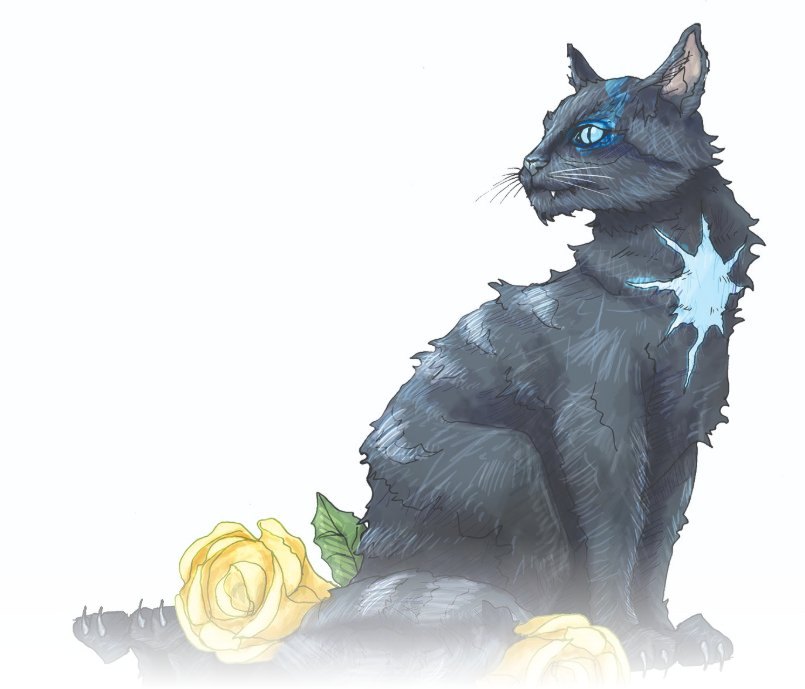
The Clubs court in the Creatures of the Fae deck is the Unseelie Court of this world rather than the Otherworld: the goblin under the hill, the Red Cap in the tower, and between them the witch-cat by the hearth. She is the queen because she is the one who comes inside. Goblins and Red Caps you can avoid by staying out of mines and ruins. The cat sìth is already on the rug, and she has been watching the body all night.
Sources and further reading
- John Gregorson Campbell, Superstitions of the Highlands and Islands of Scotland (1900), on the cat sìth and the taghairm.
- Joseph Jacobs, More English Fairy Tales (1894), “The King o’ the Cats”.
- Katharine Briggs, A Dictionary of Fairies (1976), “Cait Sith”, “King of the Cats”.
- Ronald Black (ed.), The Gaelic Otherworld (2005), Campbell’s work with modern notes.
- Di Francis, My Highland Kellas Cats (1993), on the real animal.
The twelve court cards
This post is one of twelve, one for each court card in the Creatures of the Fae deck. The Seelie Fae hold the red suits and the Unseelie Fae the black.
Seelie Fae
- Oberon, King of Diamonds
- Titania, Queen of Diamonds
- Puck, Jack of Diamonds
- the Brownie, King of Hearts
- the Pixie, Queen of Hearts
- the Leprechaun, Jack of Hearts
Unseelie Fae
- the Erlking, King of Spades
- Queen Mab, Queen of Spades
- Gwyn ap Nudd, Jack of Spades
- the Goblin, King of Clubs
- the Cat Sìth, Queen of Clubs (this post)
- the Red Cap, Jack of Clubs
The deck itself, with all twelve court cards, is here on Amazon.
Full disclosure: The Everyday Fae has a connection to the makers of the Creatures of the Fae deck.