Pixies: The Faeries of Devon and Cornwall, and How Not to Be Pixy-Led
Pixies belong to the West Country. Devon and Cornwall have them, Somerset borrows them, and nobody else in the British Isles has quite the same creature under quite the same name. They are the Queen of Hearts in the Creatures of the Fae deck, and the choice tells you something about how the deck sees the Seelie Court: small, local, mischievous, and very much part of the household.
Pixy, pisky, pigsie
The word is spelled every way the West Country could manage: pixy, pixie, pisky, pisgy, pigsie. Its origin is a genuine puzzle. It is not recorded before the seventeenth century, and attempts to link it to the Swedish pyske (a small fairy) or to puck have never quite convinced the dictionaries. Whatever its root, by the time anyone wrote it down the pixies were an established population with their own habits and their own geography. Dartmoor is thick with their place names: Pixies’ Parlour, Pixies’ Cave, Pixies’ Holt, Piskies’ Well.
What pixies do
The first thing anyone will tell you is that pixies lead you astray. To be pixy-led is to lose your way in country you know perfectly well, to walk in circles on an open moor, to find the gate you came through has vanished. The cure, in every account from Devon to the Isles of Scilly, is to turn a garment inside out: your coat, your pocket, even a glove or a stocking. The spell breaks and the path reappears. It is the most practical piece of faery lore in these islands, and people on Dartmoor still mention it, half joking, when the mist comes down.
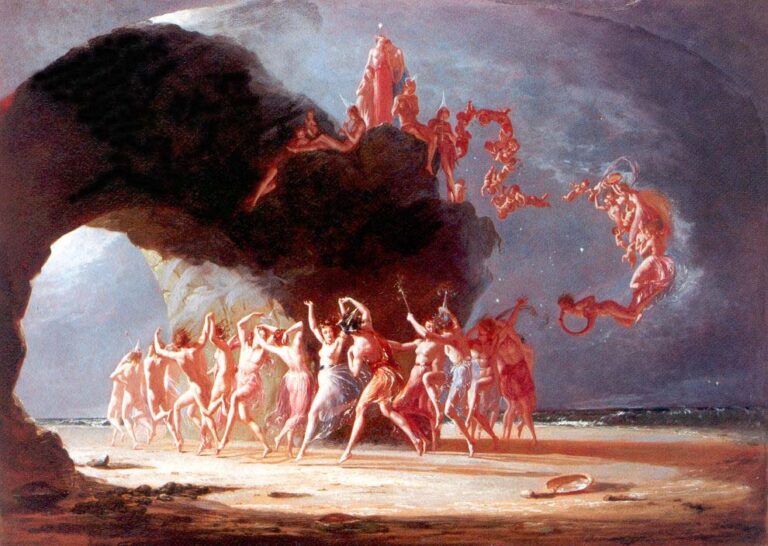
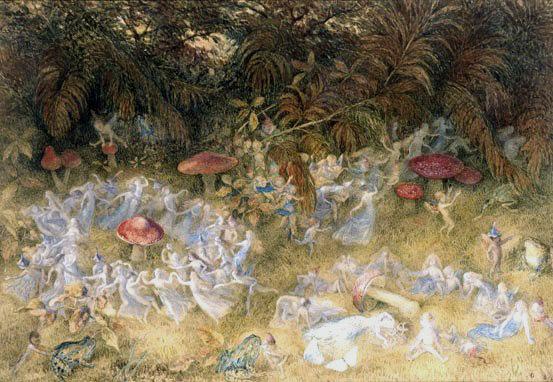
The rest of their mischief is domestic. Pixies ride horses in the night and bring them back sweating, with their manes knotted into “pixy stirrups”. They dance in rings in the grass. They steal small things and hide them. They knock on walls, blow out candles and pinch idle servants, and a careless housemaid in nineteenth-century Devon might well be told that the bruises on her arms were pixies’ work.
But they also help. Like the brownie further north, a pixie will thresh corn and tidy a kitchen for a household it likes, and like the brownie it will vanish if given clothes. The stories of the pixie threshers of Devon are brownie stories with a different accent.
Where they came from
Devon people had their own theory. Pixies, they said, were the souls of unbaptised children, or of the people who lived in these hills before Christianity, too good for hell and not fit for heaven, left to wander the moor. That belief is recorded by Anna Eliza Bray, whose letters to the poet Robert Southey, published in 1836, are the first substantial written account of pixie lore and still the richest. Mrs Bray lived in Tavistock on the edge of Dartmoor and collected what her neighbours told her: the pixy-leading, the threshing, the changeling fears, the little people dancing on the moor by moonlight.
Her pixies are small, sometimes tiny, and dressed in green or in rags. The red hair, pointed ears and turned-up noses that illustrators give them today are a later, mostly twentieth-century addition. Brian Froud, who has lived on Dartmoor for decades, has drawn them more memorably than anyone, and his pixies are old and knowing rather than cute.
The pixies and the bells
The best pixie legend is the one from Ottery St Mary in East Devon. When the church bells were first hung, the pixies of the valley could not bear the sound, which drove them from their homes. They captured the bell-ringers and marched them off to a cave on the river, meaning to stop the ringing for good. One ringer, waking, blurted out a prayer, and at the holy words the spell broke and the pixies fled. The town still remembers it. On the Saturday closest to Midsummer the children of Ottery dress as pixies, seize the bell-ringers and carry them to the Pixie’s Parlour by the river, and then let them go to ring the bells. It is called Pixie Day, and it has run since 1954 on an older story.
Church bells driving the fae away is one of the oldest motifs in faery lore. I listed it among the protections in the rules of the fae, and it turns up again in the tale of the faery king on Glastonbury Tor.
Why she is the Queen of Hearts
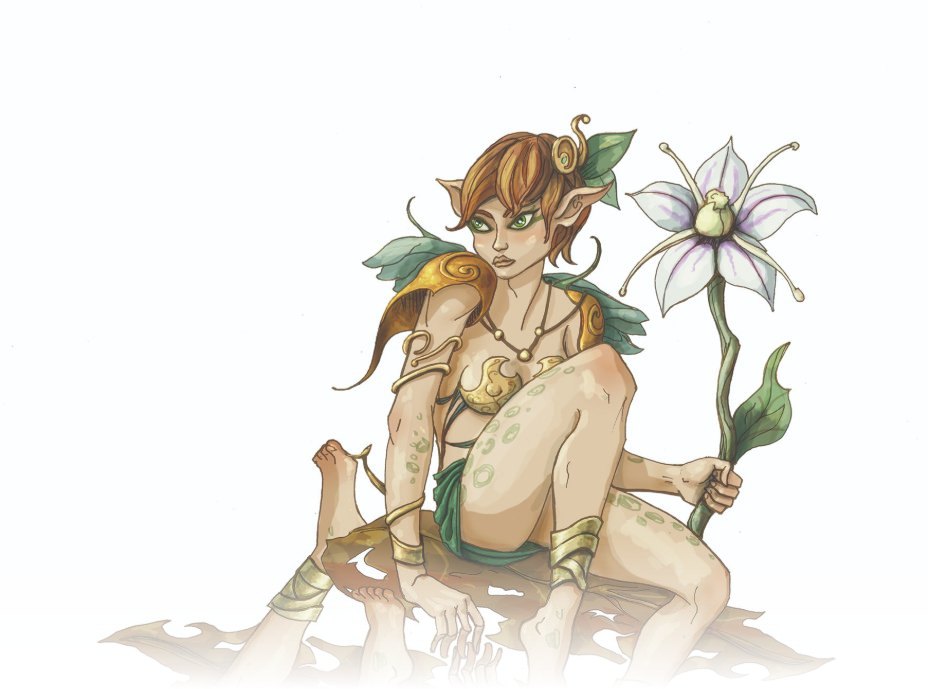
In the Creatures of the Fae deck the Hearts are the Seelie Court at home: the brownie as king, the pixie as queen, the leprechaun as jack. The pixie earns her crown by being the most sociable of the three. Brownies are solitary and leprechauns famously so, but pixies dance in troops, ride together and steal together. They are the court. And of all the faeries of these islands they are the ones ordinary people have kept talking about the longest; Devon still has a Pixie Day, and Cornwall still sells piskies to tourists. A Seelie queen should be loved. The pixie is.
Sources and further reading
- Anna Eliza Bray, A Description of the Part of Devonshire Bordering on the Tamar and the Tavy (1836), letters to Robert Southey.
- Thomas Keightley, The Fairy Mythology (1828; revised 1850), on pixies.
- Robert Hunt, Popular Romances of the West of England (1865), on piskies.
- William Crossing, Tales of the Dartmoor Pixies (1890).
- Katharine Briggs, A Dictionary of Fairies (1976), “Pixies”, “Pixy-led”.
- Brian Froud and Alan Lee, Faeries (1978).
The twelve court cards
This post is one of twelve, one for each court card in the Creatures of the Fae deck. The Seelie Fae hold the red suits and the Unseelie Fae the black.
Seelie Fae
- Oberon, King of Diamonds
- Titania, Queen of Diamonds
- Puck, Jack of Diamonds
- the Brownie, King of Hearts
- the Pixie, Queen of Hearts (this post)
- the Leprechaun, Jack of Hearts
Unseelie Fae
- the Erlking, King of Spades
- Queen Mab, Queen of Spades
- Gwyn ap Nudd, Jack of Spades
- the Goblin, King of Clubs
- the Cat Sìth, Queen of Clubs
- the Red Cap, Jack of Clubs
The deck itself, with all twelve court cards, is here on Amazon.
Full disclosure: The Everyday Fae has a connection to the makers of the Creatures of the Fae deck.