Are Faeries Evil? What the Old Stories Actually Say
No. And not good either, if you were hoping for that. That is the short answer, and you may stop here if you like.
Faeries are not evil and they are not good. They are something else, with rules of their own, and whether you come away blessed or cursed has a great deal more to do with how you behaved than with what they are. Every tradition that took them seriously says the same thing in its own words.
The longer answer is more useful, so sit down.
Why “good or evil” is the wrong question
You are asking a human question about people who are not human. It is a bit like asking whether the sea is good or evil. The sea will feed your family for forty years and drown you on a Tuesday, and it means nothing by either.
The fae are closer to us than the sea is. They have tempers, vanity, favourites and long memories. But the old storytellers were careful never to call them good. Look at the names people actually used: the Good Neighbours, the Gentry, the Fair Folk, the People of Peace. Those are not descriptions. Those are manners. You speak well of them for the same reason you speak well of a man who can hear you through the wall.
Robert Kirk, a Scottish minister who wrote the first serious book on the subject in 1691, put them “of a middle nature betwixt man and angel.” In Ireland the common account, taken down by Lady Wilde and by Yeats, was that they are fallen angels: not wicked enough for hell, not good enough for heaven, and left to make do with the hills and the hollow places in between.
Middle things. Hold on to that.
What they reward, and what they punish
If the fae are not good, they are at least consistent. Read enough of the old tales and a code comes clear, and it is not our code.
They reward:
- Generosity. The bowl of cream left out, the share of the baking, the door left on the latch.
- A clean hearth. Slovenly houses get pinched servants and soured milk. Tidy ones find a coin in the shoe.
- Discretion. The man who keeps quiet about a faery favour keeps the favour.
- A promise kept, to the letter.
They punish:
- Meanness. Nothing is surer.
- Prying. The midwife who rubbed the faery ointment on her own eye, and then let on at the market that she could see them, lost the eye for it.
- Boasting of their gifts, which turn to leaves by morning.
- Trespass: the cut thorn, the house built across their path, the foot inside the ring.
Notice what is missing. There is nothing in that list about being kind, or honest in our sense, or deserving. A saint who cuts down the wrong hawthorn fares worse than a scoundrel who leaves out the cream. That is not goodness. It is etiquette, enforced.
I have set the whole code out in the rules of the fae, and I would read it before you go leaving anything on a windowsill.
The two courts
Scotland tried to sort them, and the sorting is worth knowing so long as you do not lean on it too hard.
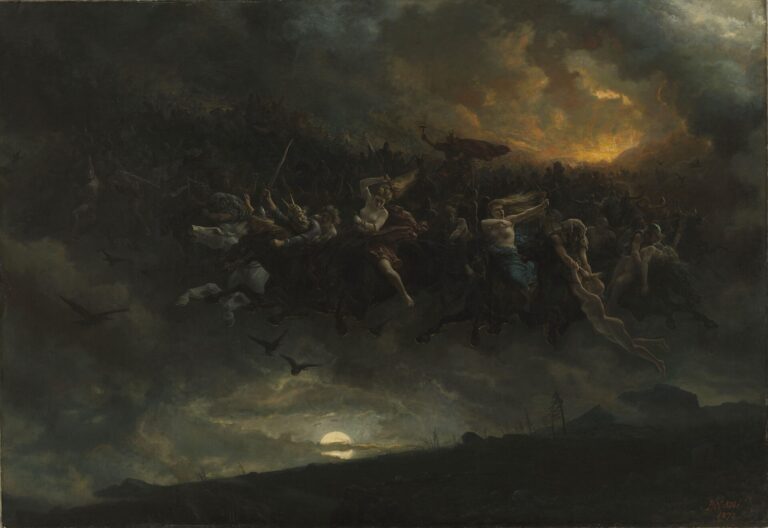
The Seelie Court is the blessed court: the fae who will return a kindness, warn a household, mend a pot. The Unseelie Court is the unblessed one, the host that rides the night wind and needs no offence to do you harm. I have written about both courts at length.
Here is the part people skip. Seelie does not mean safe. The great folklorist Katharine Briggs was plain about it: even the kindly court will avenge an insult, and avenge it thoroughly. And the dark court has members who mostly want to be left alone. The line is not between good and evil. It is between those you can bargain with and those you cannot.
So when you ask whether a particular faery is evil, ask instead: which court, and what did I do?
A rough guide to who you have met
It helps to have faces. These are all old acquaintances.
- The household sort. The brownie will thresh your corn all night for a bowl of cream and leave forever if you thank him with a coat. Helpful, proud, easily hurt.
- The tricksters. Puck and the pixies will lead you round your own field until dawn and think it the best joke of the year. You will be muddy. You will not be dead.
- The bargainers. The leprechaun keeps his word exactly, which is not the same as keeping it kindly.
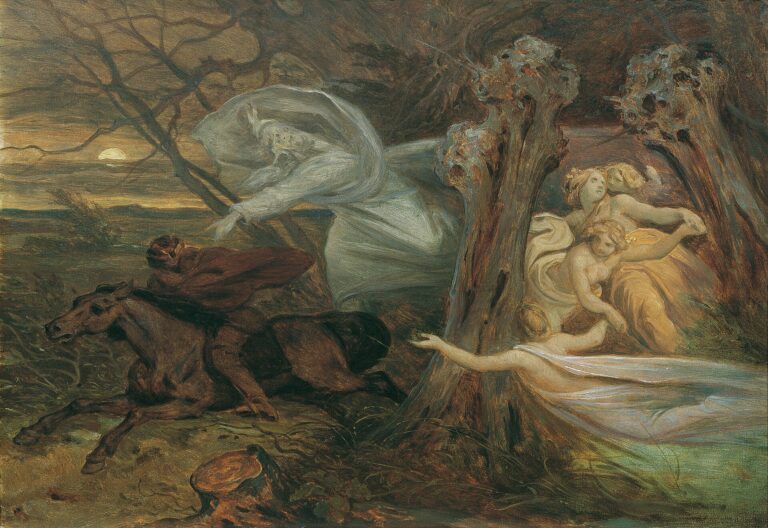
- The takers. The Erlking, the faery queens of the ballads, the ones who want a child or a piper or a handsome young man and do not ask twice. Not cruel, as they see it. They saw something they liked.
- The ones with no good side. The Red Cap in his Border tower dyes his hat in travellers. I would not look for nuance there.
Most of what you will ever meet, if you meet anything, is in the first two rows. (Your keys are under the couch cushion. They generally are.)
Then why do people call them demons?
Because they have been told so for a long time. The medieval church had no shelf for a middle thing, so the fae went on the bottom one. King James, before he had England, wrote a whole book in 1597 putting faeries down as the devil’s illusions.
I do not think the people who lived beside them ever quite believed it. You do not leave cream out for a demon. You do not call a demon your good neighbour, plough around his tree for three hundred years and tell your children to mind their manners near his hill. That is how you treat something powerful and touchy that was here first. Which is rather what they are.
Dangerous, yes. Some of them very. But dangerous and evil are different words, and the difference will matter to you some evening.
So how should you treat them?
The way you would treat any old, proud neighbour whose land runs alongside yours.
Be polite. Be generous in small things. Do not pry and do not boast. Keep what you promise and promise little. Leave their places alone. And do not go looking for the ones the stories warn you about, because the stories were not written for entertainment.
Do that, and “good or evil” mostly answers itself. They will be to you roughly what you have been to them, with interest.
The courts in your hand
If it helps to have them sorted where you can see them, the Creatures of the Fae playing cards do the job the Scots did: Seelie Fae in the red suits, Unseelie in the black, twelve court cards between them. I keep a deck on the desk. It is a handy thing for remembering who is who, and the Red Cap looks exactly as he should.
Full disclosure: The Everyday Fae has a connection to the makers of the Creatures of the Fae deck.
Keep reading
- Lady Elppy, who kept this blog before me, answered the same question from years of living alongside them: Are Faeries Good or Bad? or Evil? Read hers next. It is warmer than mine.
- The Rules of the Fae: 6 Old Rules for Dealing with Faeries Safely
- The Dark Side of the Fae
Sources and further reading
- Robert Kirk, The Secret Commonwealth of Elves, Fauns and Fairies (1691).
- Katharine Briggs, A Dictionary of Fairies (1976), entries on the Seelie Court, the Unseelie Court, fairy morality and “Virtues esteemed by the fairies”.
- W. B. Yeats (ed.), Fairy and Folk Tales of the Irish Peasantry (1888).
- Lady Wilde, Ancient Legends, Mystic Charms, and Superstitions of Ireland (1887).
- King James VI, Daemonologie (1597), Book III.
- “The Fairy Ointment”, in Joseph Jacobs, English Fairy Tales (1890).